
 1 year warranty

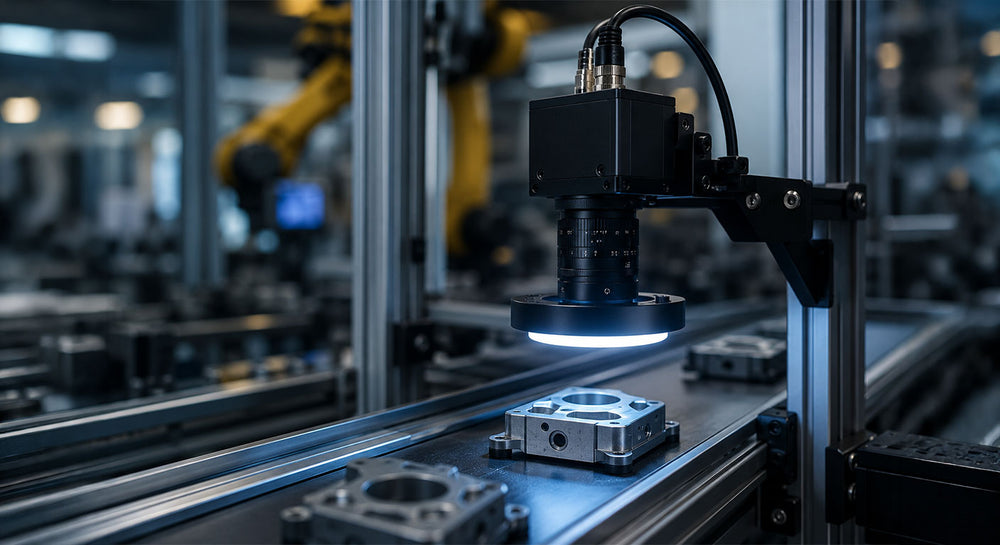
Machine vision adoption in manufacturing accelerated hard over the last decade and a half, and a lot of that first wave of hardware is now old enough that plants are starting to face a real decision about it. The camera, lighting, and controller running a vision inspection system don't fail simultaneously. They degrade unevenly:
-
A lighting element dims
-
A controller starts throwing intermittent faults
-
A camera's connector wears out
At some point, a maintenance team has to decide whether to keep patching the existing setup or replace it, and that decision looks different for vision hardware than it does for most other automation components.
The reason it's different comes down to calibration. A vision inspection station is a tuned system, not a loose collection of interchangeable parts, and replacing a single part without understanding how the whole assembly was configured can take longer than the original failure.
What Does a Machine Vision Inspection System Actually Consist Of?
A vision inspection system is built from a handful of distinct components working together. A camera or vision sensor that captures the image, a lighting fixture that controls contrast and shadow, and a controller that runs the inspection logic and sends a pass or fail signal to the PLC.
Some setups also include a barcode reader head or a laser displacement sensor to measure dimensions rather than relying on appearance alone. Machine vision hardware is typically specified and calibrated as a matched set during commissioning, which is the detail that shapes everything downstream when a piece of it eventually needs to be replaced.
When Does It Make Sense to Repair Instead of Replace Machine Vision Hardware?
Repair generally makes sense when the failure is isolated to one component and the rest of the vision inspection system is still performing to specification. A worn cable, a failed power supply within an otherwise functional camera, or a burned-out lighting element are the kinds of failures that don't justify touching the whole station. In these cases, sourcing a like-for-like replacement part for the exact model already installed keeps the existing calibration intact and gets the inspection running again without a recalibration project.
When Does Replacing the Full Machine Vision Setup Make More Sense?
Full replacement is the more practical option when multiple components are aging out together, the original vendor has discontinued the specific camera or controller generation entirely, or the inspection requirements have grown beyond what the installed hardware can handle. The same considerations covered in What To Look For When Comparing PLC Brands and Models apply here too: documented support timelines and available replacement components matter just as much for a vision platform as they do for a controller. A refurbished or used vision system that matches the original specification can often restore full inspection capability at a fraction of the cost of a new platform, particularly when the existing wiring, mounting, and PLC integration remain in place.
Where Does Machine Vision Inspection Fit Into a Broader Quality Control Line?
Machine vision inspection rarely operates in isolation. It works alongside the PLCs that route the pass/fail signal, the sensors that trigger the inspection at the right moment in the cycle, and the HMIs that operators use to review flagged parts. Common applications include:
-
Automotive assembly lines check component presence and orientation before parts move to the next station.
-
Electronics manufacturers verify solder joints, component placement, and label accuracy on populated boards.
-
Packaging operations confirm fill levels, cap seating, and label position before cartons leave the line.
-
Metal fabrication shops check surface finish and dimensional tolerances on machined parts.
-
Food and beverage producers inspect container integrity and verify printed lot codes and date stamps.
Because vision inspection sits inside this larger control loop, a repair or replacement decision on the camera or controller often has to account for compatibility with the PLC and sensor hardware already wired into the station, not just the vision components themselves.
What Should I Verify Before Sourcing a Vision Hardware Replacement?
Confirm these three factors before sourcing a replacement component:
-
The resolution and sensor type
-
The communication protocol linking the camera to the controller connection
-
The physical mounting and connector compatibility
Older installations sometimes use connector types or cable lengths that later product generations have changed, so a component that matches electrically can still need a different cable before it's usable on the existing mount.
PLC Direct carries machine vision hardware from manufacturers such as Sick and Keyence, including vision sensors and cameras for inspection and quality assurance, along with supporting components such as laser displacement sensors and barcode readers.
What Condition Grade Makes Sense for Machine Vision Hardware?
A camera or controller central to inspection accuracy carries more downstream risk than a supporting component like a barcode reader, since a failure at the camera or controller halts the line entirely. A barcode reader on a redundant station tolerates more of that risk. PLC Direct grades its machine vision hardware to reflect that: Sealed Surplus, Never Used Surplus, and Used/Refurbished.
Sealed Surplus stock stays in its original factory packaging, even if the batch itself is from an earlier production run. Never Used Surplus components have never gone into service, but the factory seal isn't guaranteed to still be intact. Used/Refurbished units go through inspection and testing before they're cleared for resale.
All three condition grades carry the same coverage: a standard 1-year PLC Direct warranty covering defects and functionality, applicable to Sealed Surplus, Never Used Surplus, and Used/Refurbished products. This warranty is issued by PLC Direct, an independent supplier, and is not an OEM or manufacturer warranty.
If a repair or replacement decision on a vision inspection system comes down to sourcing the right part, PLC Direct can help maintenance teams find it. Contact PLC Direct with your part number to check availability and get a quote, subject to inventory.
