
 1 year warranty

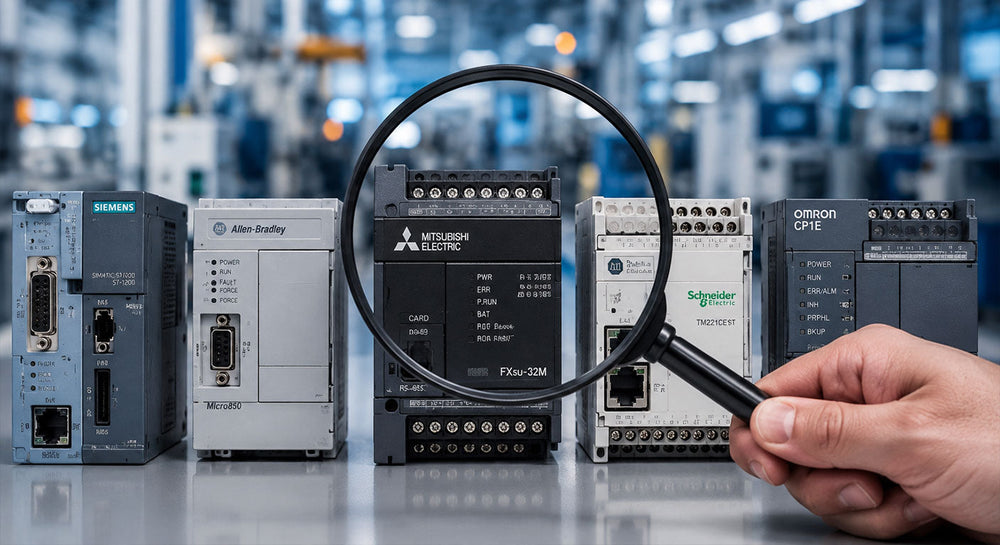
Programmable logic controllers, or PLCs, are an automation game-changer for a multitude of industries. From automating production processes to improving productivity to reducing labor costs, there’s no end to the benefits of implementing these devices. However, there are numerous PLC brands and models available on the market today, making it a seemingly daunting task to choose one that’s right for your business. Discover what to look for when comparing PLC brands and models, and how to pinpoint which one best fits your specific needs.
Performance and Capabilities
The first criterion for choosing a PLC should be its performance and capabilities. Consider factors such as processing speed, memory, and input/output (I/O) functions. Determine the control and communication requirements needed to ensure equipment, machinery, or processes function as required. You can choose a low-end PLC if you don’t have complex requirements, but if you intend to expand, you will need something high-end to accommodate these changes.
Key considerations:
- PLC performance is defined by processing speed, available memory, and supported I/O capacity.
- Different PLC models are designed to handle different levels of control complexity and workload.
- Higher-capability PLC models are commonly selected when future system expansion is expected.
Product Flexibility
You should also note the PLC's ability to work with various protocols, interfaces, and other devices. For instance, if you plan to expand your system, you may need a PLC that supports multiple communication protocols, such as Modbus, Profibus, and Ethernet. Keep in mind, too, that some brands have a proprietary system, which may make it difficult to add new devices when required. Be sure to inquire about these potential limitations when reviewing models from each brand.
Critical considerations:
- Different types of PLC brands vary in how they support open communication protocols and third-party devices.
- Some PLC brands rely on proprietary architectures, which can limit interoperability.
- Protocol support directly affects integration flexibility and future expansion options.
Reliability and Maintenance
Your business operations are critical, and a breakdown or malfunction in the equipment could cost you time and money, and even hurt your reputation. Therefore, when comparing PLCs, always assess their reliability and maintenance requirements. It’s crucial that you select reputable brands backed up with warranties and support. Read reviews for honest feedback about the overall performance of certain PLCs and ask your suppliers about recommended maintenance for the products you’re interested in.
Look out for:
- Established PLC manufacturers typically provide documented product reliability information and lifecycle support.
- Maintenance requirements and support availability vary by manufacturer and PLC design.
- Manufacturer reputation and support policies directly influence long-term system uptime.
Overall Price
Another thing to look for when comparing PLC brands and models is the price tag. Price is a crucial determinant in choosing a PLC, as you’ll need to balance cost and benefits. The cost will depend on its performance, features, and its ability to meet your requirements. In the long run, investing in a higher-end PLC could be more cost-effective than purchasing a cheaper PLC that can’t meet your needs. Still, it’s best to create a budget for this purchase and avoid paying more than what you can reasonably afford.
Important factors:
- Pricing varies across PLC models based on performance capabilities and feature sets.
- Comparing PLC models using the total cost of ownership provides a more accurate cost evaluation.
- Lower upfront cost does not always translate into long-term cost efficiency.
Ease of Programming
Lastly, consider the PLC’s ease of programming. The corresponding programming software should be user-friendly and straightforward since you or a programmer will be responsible for creating, modifying, and updating it. Brands with a good user interface and programming software should be a top priority.
Some essentials:
- Ease of programming varies across different types of PLC brands, depending on software design and supported standards.
- Programming environments influence development time and ongoing maintenance effort.
- Standardized programming tools can reduce training requirements and configuration errors.
By keeping these factors in mind while you shop, you’re sure to find the perfect PLC device for your business needs. If you need any additional help along the way, PLC Direct is here for you. We offer a diverse collection of programmable logic controllers from top brands in the industry. Whether you have smaller or larger operations, we have just the products you’re looking for.
Frequently Asked Questions:
1. Where can I buy PLCs with extended warranty options?
PLCs with extended warranty options can be purchased through authorized and independent industrial automation distributors that provide lifecycle and post-sale support. Distributors such as PLC Direct work with multiple PLC manufacturers and can help customers evaluate warranty coverage based on specific PLC models and application requirements.
2. How do PLC manufacturers differ in terms of product support and lifecycle availability?
PLC manufacturers differ in how long they support active products, provide firmware updates, and maintain spare-part availability. Evaluating PLC manufacturers includes reviewing documented lifecycle policies, end-of-life timelines, and long-term support commitments for PLC hardware and software.
3. What types of PLC brands are best suited for scalable automation systems?
Different types of PLC brands are designed for different scalability needs. Some PLC brands focus on fixed, compact control systems, while others support modular architectures that allow expansion through additional I/O, communication modules, or distributed control configurations.
4. How do PLC models affect long-term maintenance and replacement planning?
Different PLC models within the same product family can have varying maintenance requirements, expansion limits, and lifecycle status. Selecting PLC models with documented support timelines and available replacement components helps reduce downtime and simplifies long-term maintenance planning.
5. Why is it important to compare PLC models before standardizing on a platform?
Comparing PLC models before standardization helps ensure that performance, communication capabilities, and expansion capacity align with operational needs. Differences between PLC models can affect future upgrades, integration with other systems, and total cost of ownership over the system’s lifespan.
