
 1 year warranty

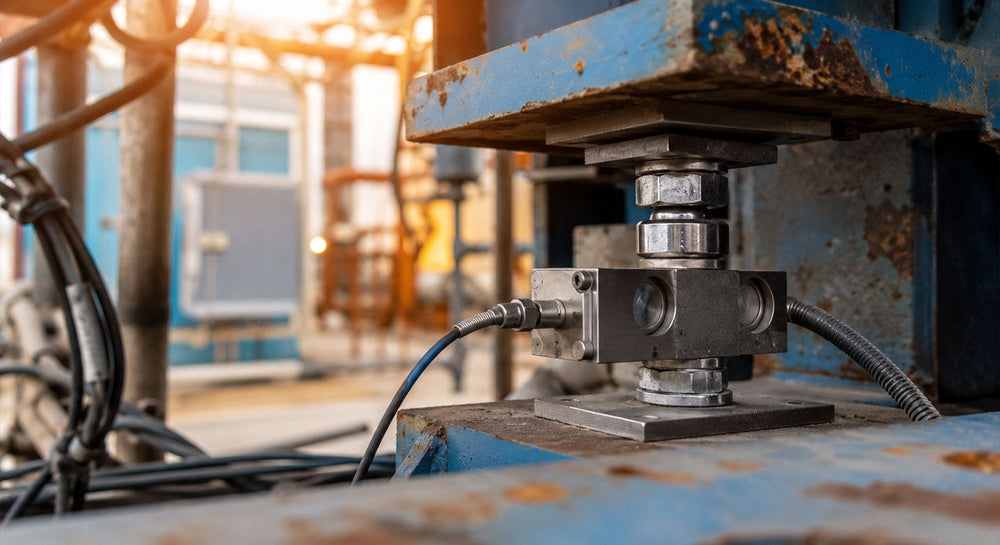
Power generation facilities run some of the longest-lived control systems in industrial automation, often twenty-five years or more between major overhauls. A load cell buried inside a coal handling system or fuel weighing station rarely gets attention until it starts producing inaccurate readings, and by then, the original manufacturer has frequently discontinued the exact model installed.
That gap between when a component starts drifting and when it's noticed is where the real risk lies. Getting the replacement right determines whether the fix restores accuracy or quietly introduces a new source of drift into a system that's otherwise been stable for decades.
Why Do Load Cells and Weighing Instrumentation Fail in Power Plants?
A load cell operating continuously in a coal handling, fuel weighing, or ash processing application experiences steady mechanical stress from vibration, temperature cycling, and exposure to dust or moisture. Strain gauge elements inside the cell gradually drift out of calibration, long before the cell fails outright, and this can go unnoticed until weighing data starts diverging from actual material flow.
A load cell amplifier or load cell signal conditioner downstream of the sensor is just as prone to failure, often due to capacitor aging or connector corrosion in a control cabinet that's been running continuously for years. Because the amplifier or conditioner sits between the load cell and the control system, reading and passing along the cell's output, a failure here can look identical to a sensor fault, even though the actual problem lives in the signal path rather than at the cell itself. Aging switchgear that hasn't kept pace with the rest of the control system is a common source of accelerated wear on both the amplifier and the load cell it's paired with.
What Should You Confirm Before Replacing a Load Cell in a Power Generation Application?
Getting a replacement load cell to read correctly with an existing system depends on matching the capacity, excitation voltage, and output signal type to those of the original component. A cell with the right physical footprint but the wrong excitation voltage will often produce readings that are close but consistently off, which is harder to catch than an outright failure.
Before ordering a replacement load cell, it helps to confirm:
-
The rated capacity and safe overload limit of the original cell
-
The excitation voltage and output signal type, such as millivolt or 4-20mA
-
Any enclosure rating the application requires for washdown or dusty conditions
-
Compatibility with the existing load cell amplifier or signal conditioner already in the cabinet
Skipping this step is a common reason a replacement cell installs correctly but never quite matches the system's calibration.
How Do You Match a Load Cell Amplifier or Signal Conditioner to an Existing System?
A load cell amplifier or load cell signal conditioner needs to match not only the electrical characteristics of the cell it serves, but also the communication protocol that the rest of the control system expects from it. Some conditioners output a simple analog signal, while others communicate digitally over a fieldbus connection integrated with the plant's PLC or DCS.
Confirming the exact model and configuration settings on the existing amplifier before ordering a replacement helps avoid a mismatch that requires reprogramming scaling factors or recalibrating the entire weighing loop after installation. In many power plants, this configuration data was set once during commissioning decades ago and isn't always documented in an accessible location for current maintenance staff.
Which Automation Platforms Support Instrumentation in Power Generation Facilities?
Siemens process instrumentation and weighing technology are commonly used to support load cell and material-handling applications in power generation facilities, often paired with Siemens PLCs for control logic and drives for pump, fan, and conveyor motor control. These platforms tend to coexist with older, plant-specific instrumentation that was installed before the current control system was commissioned, which is part of why sourcing replacement parts for power generation facilities often means supporting several generations of hardware at once.
Facilities running legacy control systems frequently find that the instrumentation layer ages differently than the PLCs and drives around it, since load cells and signal conditioners are often the last components replaced during a modernization project. The same pattern shows up in rotating equipment protection systems in these plants, where vibration monitoring hardware frequently outlasts the control layer installed around it.
Where Do Power Generation Facilities Source Discontinued Instrumentation?
Facilities running older weighing and instrumentation systems typically look beyond standard manufacturer channels once a load cell, amplifier, or signal conditioner reaches the end of life. Independent suppliers specializing in surplus and used industrial hardware have become a practical option for keeping these long-running systems accurate without a full instrumentation overhaul.
PLC Direct carries load cells, amplifiers, and signal conditioning hardware alongside the PLCs, drives, and safety components that power generation facilities depend on for continuous operation. Facilities managing decades-old control systems often need to source instrumentation components long after the original manufacturer has moved on to newer product lines.
What Condition Grade Makes Sense for Power Generation Instrumentation?
Not every component in a power generation control system carries the same tolerance for drift or downtime. A load cell on a non-critical bulk material line tolerates more risk than one feeding a process where a failure means an unplanned shutdown to replace it. PLC Direct grades its instrumentation hardware to reflect that: Sealed Surplus, Never Used Surplus, and Used/Refurbished.
Sealed Surplus stock stays in its original factory packaging, even if the batch itself is from an earlier production run. Never Used Surplus components have never gone into service, but the factory seal isn't guaranteed to still be intact. Used/Refurbished units go through inspection and testing before they're cleared for resale.
Every condition grade carries the same coverage: a standard 1-year PLC Direct warranty covering defects and functionality, applicable to Sealed Surplus, Never Used Surplus, and Used/Refurbished products. This warranty is issued by PLC Direct, an independent supplier, and is not an OEM or manufacturer warranty.
A drifting load cell or a failing signal conditioner doesn't need to compromise the accuracy of a plant's weighing and material handling systems. Reach out to PLC Direct with the specifications of the component you're replacing to check compatibility and availability, and to get a quote.
