
 1 year warranty

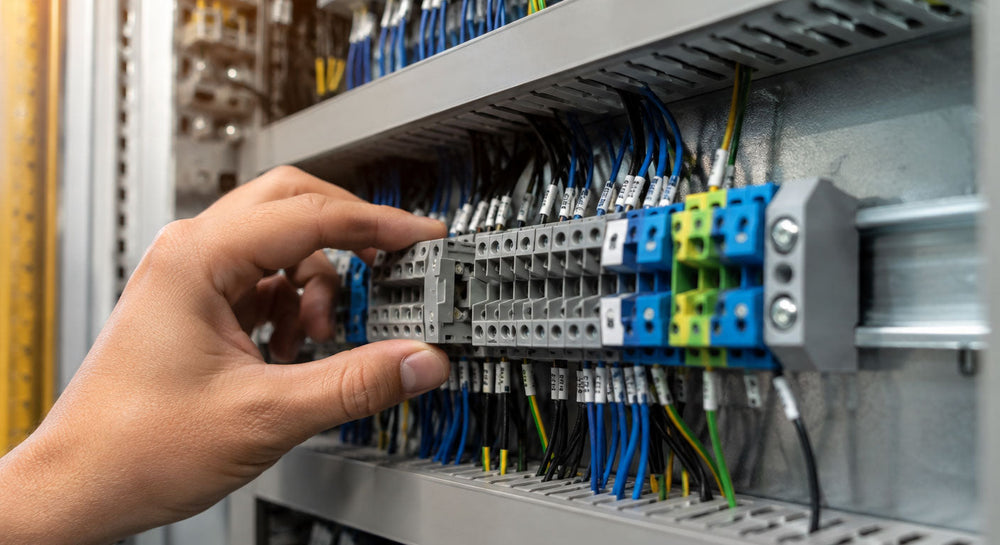
A control panel build can be held up by a single missing part, and it is rarely the PLC or the drive that causes the delay. More often, it is a wiring accessory like a terminal block, sitting on backorder while the rest of the panel is ready to go. For panel builders and maintenance teams working against a build schedule, terminal blocks are a small line item that can create an outsized problem when they are not available when needed.
Terminal blocks are the connection points that organize and secure field wiring inside a control cabinet, and every panel build depends on having the right type, size, and quantity on hand. This guide covers what panel builders and maintenance engineers should know when sourcing terminal blocks and other industrial control panel components, including how condition grades work and what to check before placing an order.
Why Do Terminal Blocks Matter in Control Panel Builds?
Terminal blocks connect and organize field wiring inside a control cabinet, providing a secure, standardized point where incoming and outgoing conductors meet the rest of the panel's wiring. Without properly rated terminal blocks in place, a panel build cannot pass inspection or safely carry power and signal wiring to its intended loads.
A control panel typically requires dozens or even hundreds of terminal block positions, depending on the system's size. Missing or incorrect terminal blocks during a build can delay the entire panel, since wiring cannot be terminated and tested until every connection point is physically in place. This makes terminal blocks a small but critical dependency in panel-building timelines, even though they rarely get the attention that PLCs, drives, or HMIs receive during project planning.
What Types of DIN Rail Terminal Blocks Are Available?
DIN rail terminal blocks are the standard mounting format used inside most modern control panels, snapping directly onto a DIN rail for quick installation and organized wiring layouts. Panel builders typically need to account for feed-through terminal blocks, which pass a single conductor straight through the block, as well as accessories that support the terminal block assembly.
Panel builders typically plan for three terminal block categories when scoping a build.
-
Feed-through terminal blocks carry standard field wiring connections throughout the panel.
-
Terminal block accessories, including end stops, jumpers, marking systems, and mounting hardware, complete the assembly.
-
Miniature terminal blocks fit compact panels where DIN rail space is limited.
PLC Direct's terminal block collection includes Phoenix Contact hardware across these categories, covering both the terminal blocks themselves and the supporting accessories panel builders need to complete an assembly.
What Should You Look for When Sourcing Industrial Control Panel Components?
Sourcing the right industrial control panel components comes down to matching current rating, wire gauge compatibility, and mounting format to the panel's design specifications. Getting these details wrong at the sourcing stage creates rework later, when a panel is already partially wired.
Before placing an order, panel builders and maintenance teams should confirm:
-
The terminal block's current and voltage rating match the circuit it will carry
-
The wire gauge range printed on the terminal block accommodates the conductors specified in the panel design
-
The mounting style is compatible with the DIN rail already specified for the panel
-
Any accessories, such as end brackets or jumper bars, are ordered alongside the terminal blocks themselves rather than treated as an afterthought
Because panel designs vary widely by application, it is worth confirming part-level details against the panel drawing rather than assuming that a single terminal block size fits every position in the cabinet.
Sealed Surplus, Never Used Surplus, or Used/Refurbished: Which Condition Fits Your Build?
Terminal blocks are supplied in three condition grades, and the right choice depends on the panel's criticality and the downtime a failure would cause. Sealed Surplus units come in the original, sealed box, though boxes may show shelf wear, and manufacturing dates vary. Never Used Surplus units have not been used or refurbished and may or may not include original packaging. Used/Refurbished units have been inspected, tested, and restored to working condition, covering both previously used and refurbished terminal block hardware.
For a new panel build where budget flexibility matters more than having factory-fresh packaging, Never Used Surplus or Used/Refurbished terminal blocks can reduce cost. For a panel supporting a process where any wiring failure incurs high downtime costs, Sealed Surplus offers the closest match to the original factory condition.
All Sealed Surplus, Never Used Surplus, and Used/Refurbished terminal blocks purchased from PLC Direct carry a standard 1-year PLC Direct warranty. This warranty is issued by PLC Direct, an independent supplier, and is not an OEM or manufacturer warranty.
Where Can You Source Terminal Blocks for a Control Panel Build?
As an independent supplier, PLC Direct stocks Phoenix Contact terminal blocks and related panel-building hardware, giving panel builders and maintenance teams another option when a part is needed for a build in progress. This includes feed-through and miniature terminal blocks, along with the accessories that go with them, subject to inventory.
PLC Direct supplies terminal blocks and other industrial control panel components for panel-building and maintenance purposes and does not provide system design, programming, or integration services.
Get the Terminal Blocks Your Panel Build Needs
Whether you are completing a new control panel build or replacing terminal blocks in an existing cabinet, having the right part on hand keeps the project moving. Contact PLC Direct to check current availability on Phoenix Contact terminal blocks and panel-building accessories and get a quote for your next build.
