
 1 year warranty

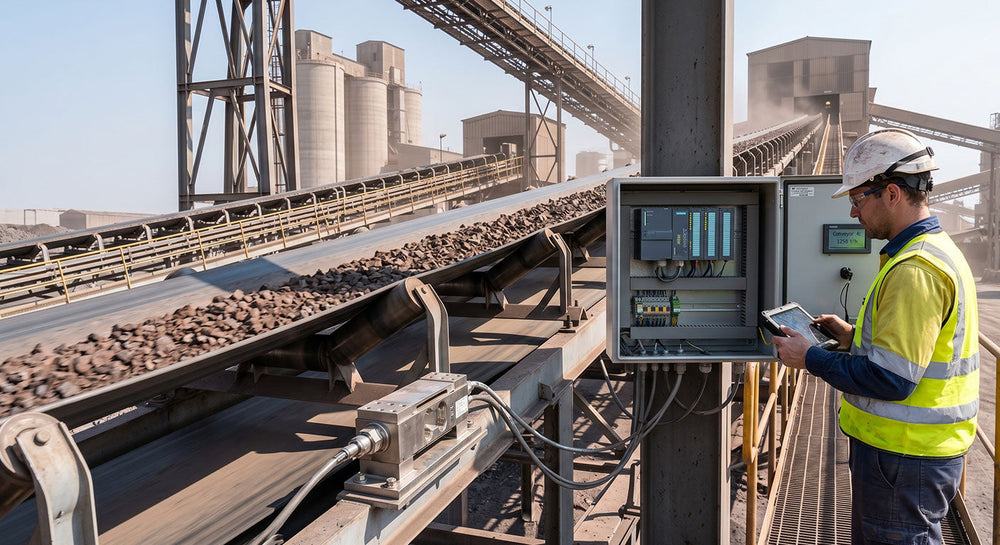
Accurate weight measurement is an operational control point in process industries. Whether a cement plant is managing clinker feed rates, a chemical facility is batching raw materials by weight, or a bulk terminal is tracking conveyor throughput, industrial weighing systems are integrated directly into the control loop. When they fail or drift out of calibration, the consequences include process shutdowns, product waste, compliance gaps, and, in some cases, regulatory exposure.
Weighing hardware is often deeply embedded in existing automation infrastructure, and replacing a load cell or weighing module requires matching the installed system's communication architecture, signal range, and accuracy class. This makes like-for-like sourcing critical, and it is exactly where independent suppliers with broad stock depth become a practical resource for facilities that cannot afford to wait.
What Do Industrial Weighing Systems Actually Control?
Industrial weighing systems provide continuous real-time data that feeds directly into control decisions throughout the process. They determine how much raw material enters a reactor, how full a silo is before a transfer, whether a batch has reached its target weight before discharge, or how much product has moved across a conveyor belt over a given time window.
The hardware at the center of these measurements is the load cell, which converts mechanical force into an electrical signal. Load cells are selected based on capacity rating, accuracy class, environmental protection, and mounting configuration, with temperature range, corrosion resistance, IP rating, and signal stability all factoring into compatibility with the installed system.
Signal conditioning and processing are performed by dedicated weighing electronics and modules upstream of the load cell. These components amplify and digitize the load cell output, apply calibration parameters, and communicate weight values to the broader control system via industrial fieldbus protocols.
How Does SIWAREX Load Monitoring Integrate with Process Control Systems?
SIWAREX is Siemens' dedicated weighing technology product line, designed to integrate weighing directly into SIMATIC-based automation architectures. SIWAREX load monitoring modules connect to SIMATIC S7-series PLCs and communicate across PROFIBUS and PROFINET, operating within the same control environment as the rest of a SIMATIC installation.
This integration matters for process facilities already running Siemens automation. When a SIWAREX module needs to be replaced, sourcing the correct module type preserves the communication protocol, signal range, and software configuration of the existing system. Substituting an incompatible weighing module typically requires re-engineering the interface between the weighing hardware and the PLC, adding time and cost that most maintenance teams are trying to avoid.
SIWAREX modules cover a broad range of weighing applications:
-
Belt scale systems for continuous conveyor throughput measurement
-
Hopper and tank weighing for level control and batch management
-
Filling and dosing applications requiring high repeat accuracy
-
Platform scales in general industrial weighing installations
Different module variants address different signal input types and accuracy requirements, so identifying the specific module type currently installed is the starting point for any replacement sourcing exercise.
Where Are Load Cells Used in Process Industries?
Load cells used in process industries span virtually every sector that moves, transfers, or transforms bulk material. The specific environmental and accuracy demands vary significantly by sector, which is why hardware selection and like-for-like replacement both matter.
Chemical and Petrochemical
Load cells under reactor vessels and raw-material hoppers provide batch weight data that feed directly into the DCS or PLC recipe system. An underweight or overweight batch can produce off-spec product, trigger a safety response, or compromise yield.
Cement and Building Materials
Belt scales and hopper weighers control the feed rates of raw materials into kilns and mills. These systems run continuously in high-vibration, high-dust environments, and the quality of load cell mounting hardware directly affects how well calibration holds between service intervals.
Mining and Bulk Material Handling
Weighing systems monitor conveyor throughput and control transfer rates between stockpiles and processing stages. The load is typically measured dynamically on a moving belt, which imposes different accuracy and reliability demands on the system than static hopper applications.
Food and Beverage
Industrial weighing systems are used for filling, portioning, and recipe batching, where both accuracy and hygiene are factors in hardware selection. Stainless steel load cells with high IP ratings are common in these environments, and the weighing module must be compatible with the facility's existing PLC infrastructure.
What Should Maintenance Teams Check Before Replacing Weighing Hardware?
Replacing weighing hardware in an installed system requires matching on several parameters simultaneously. Mismatches on any of these introduce measurement error that will affect process accuracy over time. Before sourcing a replacement, confirm:
-
Load cell capacity rating and accuracy class
-
Output signal type and excitation voltage
-
IP protection rating and environmental certifications
-
Mounting configuration and mechanical dimensions
-
For SIWAREX modules: the specific module variant, supported input types, and fieldbus configuration.
PLC Direct stocks Siemens SIWAREX modules for maintenance and replacement within existing SIMATIC installations, available as surplus sealed, refurbished, and used hardware. SIMATIC S7 I/O modules and communication hardware for PROFIBUS and PROFINET installations are also available, supporting the full signal chain rather than just the weighing module in isolation.
For facilities running ABB or Schneider Electric automation alongside Siemens weighing hardware, PLC Direct carries hardware from ABB's AC500 platform and Schneider Electric's Modicon series, both widely deployed in process industry environments where multi-brand installations are common.
How Do You Source Replacement Weighing Hardware for Legacy Systems?
The most practical approach is to identify the exact installed part number and work with an independent supplier that stocks both current and older product generations. OEM lead times for weighing modules and load cell instrumentation can stretch to several weeks, a timeline that continuous process applications rarely accommodate.
Surplus sealed SIWAREX modules carry the same part number and hardware specification as the original supply, making them a direct replacement in most installed systems. Refurbished and used hardware verified for functionality provides additional sourcing options, though the appropriate condition grade should be assessed based on the measurement's criticality and the facility's maintenance standards.
Confirming the module variant before ordering is an important step, as different SIWAREX module types support different input configurations, accuracy grades, and communication interfaces. Receiving hardware that cannot be directly installed adds cost and delay that the sourcing process was meant to avoid.
If you are maintaining an existing SIWAREX load monitoring installation or sourcing load cell instrumentation for a process industry application, contact PLC Direct to check current stock availability and request a quote.
