
 1 year warranty
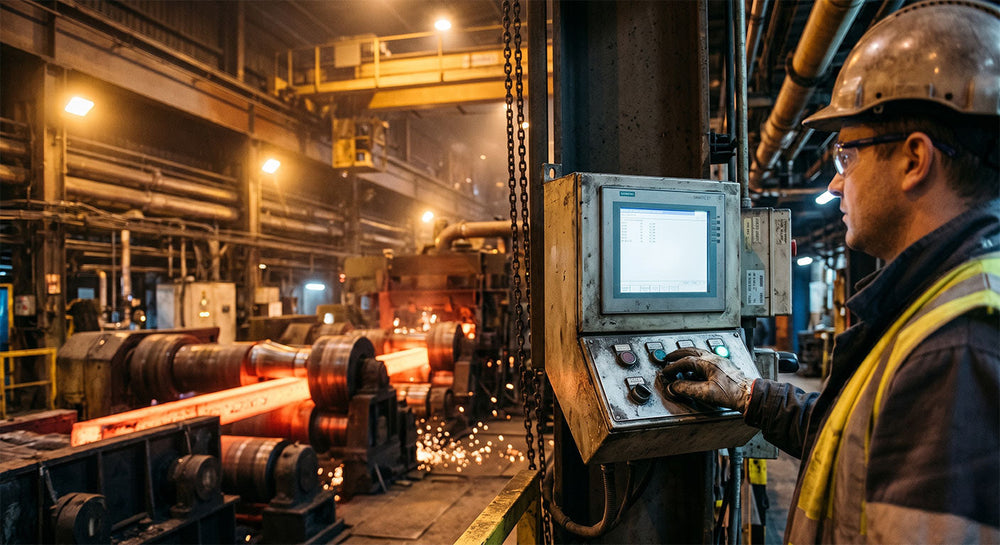
Steel and metals facilities don't replace their automation infrastructure on a regular cycle. A rolling mill control system commissioned in the late 1990s may still be running its original PLCs and drives. A continuous casting line may be operating with motor control hardware that predates current product generations by fifteen years or more. The capital investment behind these facilities is substantial, and the automation systems integrated at commissioning are expected to serve the life of the plant, not a product generation cycle.
Managing that installed base over the long term is a specific discipline. It requires knowing which components are still supportable, how to source replacement hardware when OEM channels fall short, and how to make repair-versus-replacement decisions without disrupting continuous production. This blog covers how maintenance engineers and procurement teams at steel and metals operations manage long-running automation parts for the steel industry, and what role automation parts for the steel industry play in keeping them running.
Why Steel Plants Run Automation Systems for Decades?
Steel plants run automation systems for decades because replacing a control system mid-production is operationally disruptive and difficult to justify while installed hardware remains functional. Steel processes are continuous or semi-continuous, and a controls migration requires planned downtime that competes directly with production targets. As long as the installed system is stable and serviceable, the business case for a full replacement is difficult to make.
The result is mixed-generation automation environments: newer hardware in recently upgraded areas alongside legacy platforms still running in sections of the plant that haven't required intervention.
Which Hardware Categories Drive Maintenance Activity in Long-Running Steel Plant Systems?
The automation hardware categories that drive the most maintenance and replacement activity in steel plants are PLCs, drives, I/O modules, HMIs, and motor control hardware. Each category presents its own sourcing challenges as systems age.
PLCs and Controllers
SIMATIC S7-300 and S7-400 platforms remain widely installed in North American steel operations, now in limited or end-of-support phases. Schneider Electric Modicon Quantum and Modicon Premium systems appear in older process and batch control roles. ABB AC500 PLCs support both process and discrete control applications. When one of these controllers fails, sourcing a surplus PLC for heavy industry replacement preserves the installed architecture and avoids forcing a platform migration under production pressure.
Drives
Variable frequency drives on rolling mill stands, conveyor systems, cooling fans, and pump circuits accumulate operating hours under sustained load. Legacy drive families, including Siemens SIMOVERT and SIMODRIVE and ABB ACS series, are still running in facilities where the process equipment they control hasn't been replaced. Legacy drive replacement metals processing is complicated by the fact that many of these families are no longer in active production, making OEM channels unreliable for fast turnaround.
I/O Modules and Communication Hardware
A single failed I/O card can take down a process segment. In SIMATIC S7 installations, analog and digital I/O cards, PROFIBUS communication modules, and ET 200SP distributed I/O components are routinely needed for targeted repair. Schneider Electric Modicon Momentum distributed I/O and associated communication modules serve the same role in older Modicon-based systems.
HMIs and Operator Panels
SIMATIC HMI panels and Schneider Electric Magelis/Harmony terminals see continuous use across multiple shifts in hot, dusty environments. Screen failures and touch interface degradation are common failure modes in panels that have been in service for a decade or more.
Motors and Motor Control Hardware
Siemens SIMOTICS motors, SIRIUS motor starters, and SIMOCODE motor management systems support process and utility motor applications across steel facilities. Replacement is often straightforward once the correct part number is confirmed from the nameplate.
What Challenges Come With Age in Installed Steel Plant Automation?
Long-running systems create predictable challenges that maintenance teams need to plan around.
Discontinued Product Lines
When a PLC or drive family reaches end of life, OEM support and spare parts availability wind down. Facilities running these platforms must choose between a migration project or sourcing replacement hardware through independent channels to extend the installed system's life. For most steel operations, lifecycle extension is the more practical path when the process equipment still has years of productive service ahead.
Exact Compatibility Requirements
Replacement hardware must match the installed system precisely. A different hardware revision or an incompatible PROFIBUS module can cause commissioning delays that extend the production impact of the original failure. Part numbers pulled directly from nameplates are the reliable starting point, not general product catalogs.
Sourcing Under Pressure
A stopped casting line or rolling mill loses production measured in tons per hour. Maintenance teams that have already identified suppliers for legacy automation hardware and confirmed relevant stock respond faster than those sourcing under emergency conditions for the first time.
The Role of Surplus Sealed and Refurbished Hardware
-
Surplus, sealed, and refurbished automation hardware provides access to legacy components no longer available through active OEM distribution, often with shorter lead times than standard procurement channels.
-
Surplus sealed units are factory-sealed stock in original packaging, not used or refurbished, but from older production runs. For a facility that needs a direct replacement for a legacy SIMATIC S7-400 CPU, a Modicon Quantum processor, or an ABB ACS drive, a surplus sealed unit preserves system compatibility without requiring platform changes.
-
Refurbished hardware has been tested and restored to operational condition, providing an alternative when sealed stock isn't available.
-
Used hardware is pulled from service and suits applications where budget is the primary constraint.
To Conclude
Steel and metal facilities operate on long investment cycles, and the automation systems that run them are expected to match that timeframe. Managing installed hardware through component failures, discontinued product lines, and sourcing gaps is an ongoing maintenance reality, not a one-time project. Having the right parts available when a critical component fails is what keeps production running without forcing a full platform replacement before the process equipment warrants it.
Looking for surplus sealed, refurbished, or used automation parts for your steel or metals facility? Contact PLC Direct to check availability and request a quote.
