
 1 year warranty

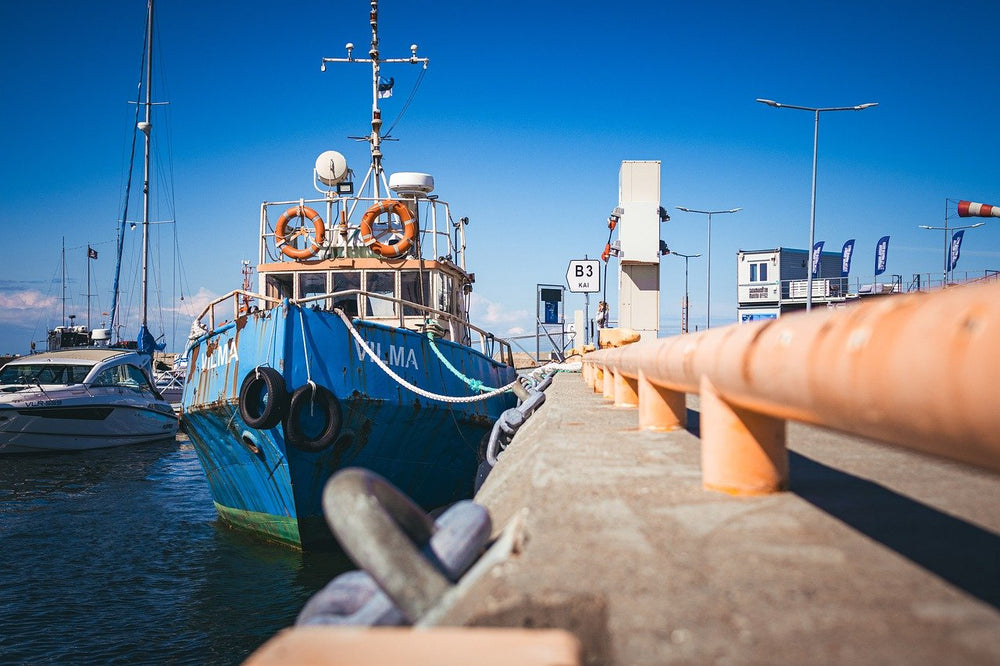
Marine vessels depend on automation to manage systems that run continuously, in hostile environments, with limited access to onshore support. Whether the application is propulsion control on a cargo carrier or ballast management on a tanker, the hardware handling those processes needs to be reliable, rugged, and replaceable when something fails.
Programmable logic controllers are central to that infrastructure. This guide covers how PLCs and broader automation hardware are used across marine applications, and where PLC Direct can support sourcing needs for marine automation for ships.
What is Marine Automation?
Marine automation refers to the use of control systems to monitor and manage the mechanical and operational systems aboard a vessel or across port infrastructure. The goal is consistent, reliable performance with reduced dependence on manual intervention.
Automation systems on modern vessels handle navigation, power generation, propulsion, cargo operations, ballast management, safety monitoring, and environmental compliance. On large commercial ships, these systems run in parallel across dozens of subsystems, all requiring precise coordination.
PLCs form the backbone of most shipboard automation. They execute control logic in real time, interface with sensors and actuators, and communicate across vessel networks to keep critical systems running within defined parameters.
What Are the Benefits of PLCs in the Marine Industry?
Marine automation offers measurable operational advantages across vessel types and applications. Programmable logic controllers for marine automation address several critical areas:
-
Enhanced Efficiency: Automated systems optimize processes, including fuel management, navigation, and cargo handling, reducing operating costs and improving time management across vessel operations.
-
Improved Safety: Automating safety-critical systems such as fire detection and emergency shutdowns reduces the risk of accidents caused by human error, protecting crew and cargo while supporting compliance with maritime safety standards.
-
Environmental Compliance: Automation enables real-time monitoring and control of emissions and ballast water treatment systems, helping vessels meet international environmental regulations, including those set by the International Maritime Organization (IMO).
-
Reduced Operational Costs: Automated systems reduce the need for manual intervention, lowering labor costs and minimizing downtime. Continuous monitoring also allows maintenance teams to identify developing issues before they result in unplanned failures.
What Is the Use of a PLC in a Ship?
Modern cruise ships are often called "floating cities" because of the scale and complexity of their onboard systems. Cargo carriers, tankers, and offshore vessels face similar demands, even if the applications differ.
PLCs in ships are used across a wide range of shipboard functions.
Engine and Propulsion System Control
PLCs monitor and control engines, thrusters, and propellers. A PLC-based propulsion system allows operators to manage fuel flow, engine speed, and thruster response from a centralized interface, reducing the manual workload on engineering crews while improving response time.
Navigation Systems
Automated navigation, including autopilot and dynamic positioning, relies on PLCs for real-time control and feedback. PLCs integrate inputs from GPS, speed sensors, gyrocompasses, and environmental sensors to maintain course and heading with minimal manual correction. This is particularly critical on vessels operating in confined waters or during offshore operations requiring precise station-keeping.
Cargo and Ballast Control
PLCs automate cargo loading, unloading, and trim management, as well as ballast water operations. Maintaining correct load distribution is essential for vessel stability. Automating these processes reduces the risk of human error during complex cargo operations and ensures compliance with stability requirements.
Safety and Security Systems
PLCs monitor fire detection systems, bilge pumps, gas detection, and emergency shutdown mechanisms. In a marine environment, the speed of automated response matters more than in most industrial settings. A PLC that detects an anomaly and initiates shutdown in milliseconds provides a safety margin that manual intervention cannot match.
Environmental Monitoring
International Maritime Organization (IMO) regulations require vessels to monitor and control emissions and to treat ballast water. PLCs continuously manage these monitoring functions, logging data and triggering interventions when parameters move outside compliance limits.
HVAC, Lighting, and Hotel Systems
On passenger vessels and large commercial ships, PLCs also manage HVAC, lighting, water supply, and waste systems. These systems run around the clock and benefit from automated control that adjusts output based on occupancy, load, and environmental conditions.
What Automation Hardware Is Used on Ships?
Effective maritime automation for ships extends beyond PLCs. The full hardware picture includes variable frequency drives, I/O modules, HMIs, and communication hardware, all working together across the vessel's control network.
VFDs are widely used for motor-driven applications, including pumps, fans, compressors, and winches. They enable precise speed control and reduce energy consumption, a significant operational priority on vessels where fuel efficiency directly affects operating costs. Schneider Electric Altivar drives are used in pump and fan control applications where variable speed operation improves both efficiency and equipment longevity.
HMIs provide operators with the visualization layer that connects crews to the automated systems running below deck. On a vessel with dozens of automated subsystems, a well-configured HMI is as important to safe operation as the control logic itself.
I/O modules, communication interfaces, and remote I/O hardware extend the control network across distributed points on the vessel, from engine rooms to cargo holds to the bridge.
PLC Direct stocks hardware from brands including Omron, Beckhoff, Schneider Electric, and Prosoft, among others, used in marine automation environments. Available hardware includes PLCs, VFDs, I/O modules, and communication hardware, available as surplus, sealed, refurbished, and used stock, with a 1-year PLC Direct warranty on all products.
What Makes Marine Environments Demanding for Automation Hardware?
Ships operate in conditions that accelerate hardware failure. Salt air and humidity corrode electrical contacts and enclosures. Vibration from engines and propulsion systems fatigues connections and circuit boards over time. Temperature cycling between machinery spaces and exposed deck areas stresses components that were not designed for marine conditions.
Hardware used in marine automation needs to meet the environmental ratings relevant to its installed location, and maintenance teams need access to replacement parts when components fail at sea or during port turnarounds, where downtime is measured in dollars per hour.
Sourcing replacement automation hardware for marine vessels presents its own challenges. OEM lead times for industrial automation components can run weeks or longer. For vessels on commercial schedules, that timeline is not workable. Independent suppliers with available stock provide an alternative channel when standard distribution cannot meet the timeline.
How Can PLC Direct Help With Marine Automation?
PLC Direct is an independent supplier of surplus sealed, refurbished, and used industrial automation hardware from brands including Omron, Beckhoff, Schneider Electric, and Prosoft, among others, used across marine automation applications. Our inventory covers PLCs, VFDs, I/O modules, and communication hardware suited to the range of control and monitoring functions found on commercial vessels, offshore platforms, and port infrastructure.
Whether the requirement is a compact PLC for a smaller vessel application or communication hardware for a distributed control network on a larger ship, PLC Direct stocks hardware across conditions and price points. All products come with a 1-year PLC Direct warranty.
We supply hardware for maintenance, replacement, and lifecycle support of existing installed systems. We do not provide programming, integration, or technical support services.
For marine maintenance teams and procurement staff sourcing replacement automation hardware, contact us to check availability and get a quote.
