
 1 year warranty

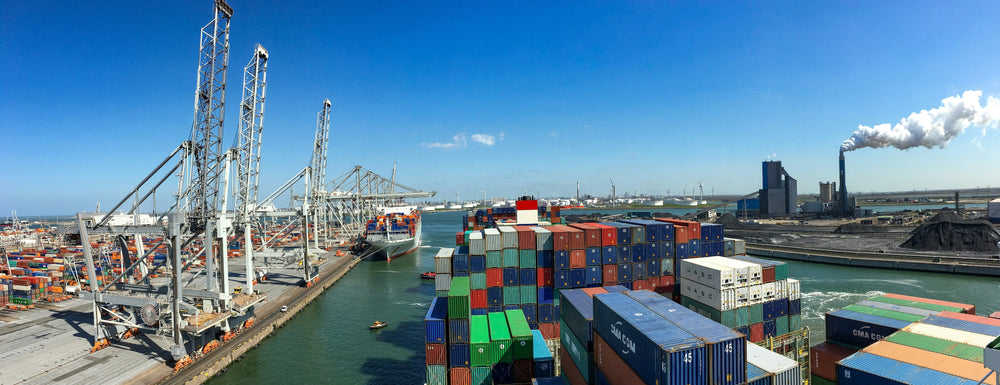
According to UNCTAD's Review of Maritime Transport 2023, the shipping industry is responsible for nearly 3% of global greenhouse gas emissions, with those emissions rising 20% over the past decade. That pressure, combined with mounting demands for operational efficiency and crew safety, is accelerating the adoption of automation in the maritime industry. As technology advances, ships are becoming smarter, more connected, and increasingly AI-driven.
From programmable logic controllers (PLCs) in marine automation to autonomous vessels, these innovations are transforming how ships operate. Here's a look at the most significant trends shaping the future of maritime automation.
How Are Autonomous Ships Changing Maritime Operations?
Fully autonomous and remotely operated vessels are no longer a futuristic concept. They're already being tested and deployed. Several major technology and defense contractors have been developing unmanned ships equipped with advanced sensors, AI-driven navigation, and remote operation capabilities.
While fully autonomous commercial ships are still in their early stages, semi-autonomous systems that reduce crew workload are becoming standard in modern fleets. These systems depend on a layered stack of automation hardware working together, not just control software.
What Technologies Enable Autonomous Shipping?
- AI and Machine Learning: Enables real-time decision-making for route optimization and collision avoidance.
- LIDAR and Advanced Radar Systems: Provides enhanced situational awareness, even in extreme weather.
- Satellite-Based Communication: Ensures seamless connectivity for remote operations and fleet management.
While fully autonomous commercial ships are still in their early stages, semi-autonomous systems that reduce crew workload are becoming standard in modern fleets.
How Does AI-Driven Predictive Maintenance Work in Marine Environments?
Downtime at sea is costly, and unexpected failures can lead to dangerous situations. This is why predictive maintenance is becoming a core component of automation for ships.
Predictive maintenance in marine environments operates across three stages. First, sensors collect real-time data on engine performance, fuel consumption, and component wear. Second, machine learning algorithms analyze that data to detect patterns that indicate potential failures. Third, the system notifies engineers before a failure occurs, reducing unplanned downtime and repair costs. This approach improves safety by ensuring that critical ship systems, from propulsion to power distribution, remain operational throughout a voyage.
Find out more about How PLCs Ensure Safety in Hazardous Industrial Environments and their role in predictive maintenance.
What Role Does IoT Play in Maritime Automation?
The Internet of Things (IoT) is transforming marine automation by connecting ship systems to the cloud, allowing operators to monitor and control vessel performance from anywhere in the world. IoT-driven marine automation delivers three tangible operational benefits. Remote diagnostics allow engineers to troubleshoot issues without being on board. Fleet-wide performance tracking gives ship operators real-time insights across multiple vessels simultaneously. Automated compliance reporting reduces administrative work by automatically logging operational data for regulatory bodies.
As bandwidth and satellite connectivity improve, IoT-based automation will continue to enhance efficiency and reduce operational costs.
How Is the Industry Managing Cybersecurity in Marine Automation?
As ships become more digitally connected, they also become more vulnerable to cyber threats. A cyberattack on a vessel's control system could disrupt operations, compromise safety, and lead to significant financial losses.
Shipping companies are addressing this through encrypted communication to protect ship-to-shore data transmissions, access control measures that limit who can interact with ship automation systems, and AI-based threat detection that identifies and neutralizes potential threats before they escalate. Shipping companies are now required to comply with international cybersecurity regulations, ensuring their automated systems are protected from digital threats.
Why Are PLCs Gaining Adoption in Marine Automation?
One of the most foundational components of marine automation is the programmable logic controller (PLC). These industrial computers are used to monitor and control everything from propulsion and power distribution to safety systems and HVAC, making them a central node in an interconnected shipboard automation architecture.
Marine environments place demanding requirements on automation hardware. PLCs provide real-time control and system redundancy, which directly reduces the risk of failures at sea. Automating ship functions with PLCs reduces fuel consumption and optimizes operations across propulsion, ballast, and auxiliary systems. Many marine regulatory bodies also require automated safety measures, and PLCs help ensure compliance with those requirements. Modern PLCs connect with IoT-based monitoring platforms, enabling the predictive maintenance strategies described above.
Beyond PLCs, ship operators are increasingly specifying variable frequency drives (VFDs) for pump and fan motor control, where energy savings compound across long voyages. Sensors and I/O modules form the data acquisition layer that feeds both PLCs and cloud-based monitoring platforms. HMIs give crews direct visibility into system status across complex shipboard automation networks. Each of these hardware categories must meet marine-grade durability standards, including resistance to vibration, humidity, and salt air.
Learn more about Automation and PLCs in the Marine Industry and how they are transforming ship operations.
What Should You Look for When Selecting a PLC for Marine Use?
With the rapid expansion of automation in the maritime industry, selecting the right programmable logic controllers for marine automation has a direct impact on system reliability and long-term operational cost. Not all PLCs are suited for harsh marine environments, so operators must choose carefully.
- Durability: The hardware must withstand vibrations, humidity, and extreme temperatures common in marine engine rooms and exposed control panels.
- Redundancy Features: Fail-safes and backup systems are essential for mission-critical operations where a single point of failure cannot be tolerated.
- Scalability: The ability to integrate with future automation upgrades ensures the control architecture does not become a constraint as shipboard systems evolve.
- Brand Reliability: Some manufacturers offer better lifecycle support and parts availability than others, which matters when a vessel is operating far from a service center.
The Future of Marine Automation
As automation, AI, and IoT continue to advance, how ships operate will become more efficient, sustainable, and safer. Paired with the right combination of PLCs, VFDs, sensors, and connected monitoring hardware, ship operators can optimize fuel efficiency, enhance safety, and ensure compliance with ever-changing regulations. Companies that embrace these technologies today will be the ones leading the industry tomorrow.
Looking for surplus sealed or refurbished marine automation hardware, including PLCs, drives, or I/O components? Contact us to check availability and get a quote.
