
 1 year warranty

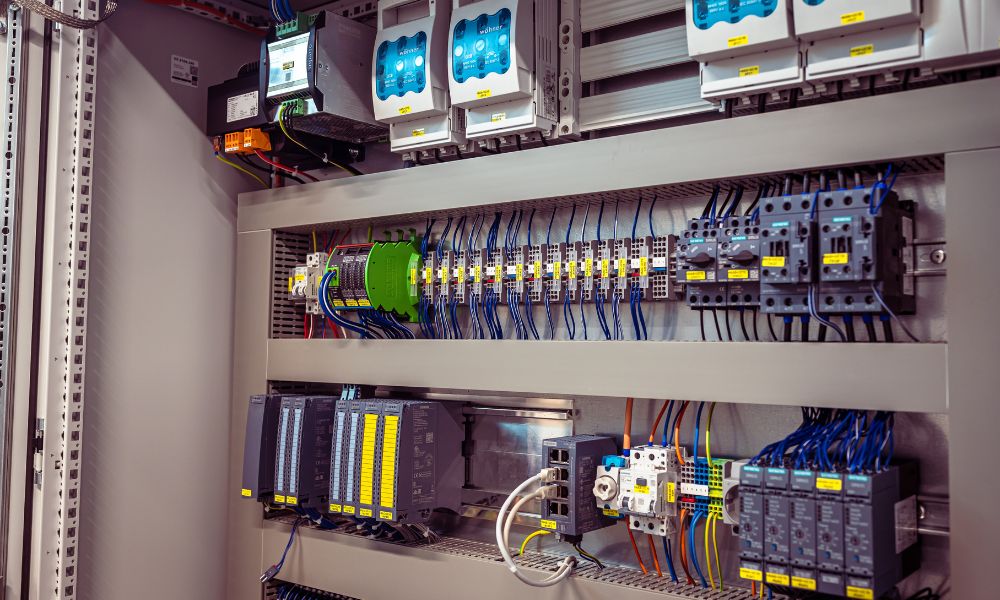
In industrial automation, precise control over machine movement is what separates a reliable process from one prone to error, waste, and unplanned downtime. A programmable motion controller handles the coordination of speed, position, torque, and acceleration across one or more axes, executing motion sequences with a level of repeatability that manual adjustment cannot match. For maintenance engineers and procurement teams responsible for keeping production equipment running, understanding what motion controllers do and why they matter is increasingly relevant as automation becomes more deeply embedded in manufacturing and processing operations.
How Does a Motion Controller Differ From a PLC?
Understanding motion controller vs PLC differences starts with specialization. A PLC is designed for broad industrial control, managing discrete I/O, sequencing logic, process monitoring, and communication across a system. A PLC motion controller, or a PLC with integrated motion capability, can handle basic motion tasks, but its architecture is not optimized for complex multi-axis coordination or high-speed trajectory control.
A dedicated programmable motion controller is built specifically for motion, with hardware and firmware designed around real-time position feedback, interpolation, and axis synchronization. In practice, many installations use both: a PLC handling overall machine logic, with a dedicated motion controller managing axes that require the highest precision. Siemens SIMOTION, for example, is a motion controller platform designed to integrate closely with the SIMATIC PLC architecture, simplifying coordination between the two layers.
What Makes Programmable Motion Controllers More Precise Than Standard Control Systems?
Programmable motion controllers (PMCs) offer enhanced precision. Manufacturers can move machines more precisely, reducing errors and ensuring equipment operates as intended. This improves manufacturing quality and reduces the production of faulty parts. Additionally, PMCs give manufacturers control over a machine's speed and acceleration, making it easier to increase output without sacrificing quality.
How Do Motion Controllers Improve Operational Flexibility?
Through innovative programming, motion controllers give manufacturers greater operational flexibility by enabling them to adapt to new projects or changing regulations. You can quickly alter a motion controller to suit new machines and control modes or systems. The flexibility and versatility of programmable motion controllers enable the production of high-quality products while maximizing production time.
Can Programmable Motion Controllers Help Reduce Production Costs?
Another perk of automation provided by PMCs is reduced labor costs for auxiliary tasks. Human error often results in waste, so automation can help you conserve valuable resources. Consistent motion profiles also reduce mechanical wear on drive components, actuators, and tooling, thereby lowering the frequency of hardware replacement and extending service intervals throughout the equipment lifecycle.
How Do Programmable Motion Controllers Improve Communication Between Machines?
Another reason why programmable motion controllers are so important is that they simplify communication between equipment. Communication is vital to industrial processes, and PMCs improve communication between machines and even facilities. Programmable controllers can exchange data with other devices. This leads to high performance, less wear and tear, and lower machine downtime.
How Do Motion Controllers Support Machine Safety Requirements?
Programmable motion controllers provide an extra layer of safety to equipment. Employee safety should be your top priority, especially for operators of hazardous machinery. Fortunately, you can program motion controllers to ensure machines operate safely. This helps you stay compliant with your industry’s health and safety requirements.
To Conclude
The distinction between a motion controller VS PLC comes to specialization, and when it comes to replacement, that distinction matters. Choosing the right motion controller vs PLC for your installed system is critical to getting production back up quickly. PLC Direct stocks surplus sealed, refurbished, and used motion control hardware across the brands already running in your facility, including servo drives, motion controllers, and supporting automation components. When OEM lead times aren't an option, contact our team to check availability.
