
 1 year warranty

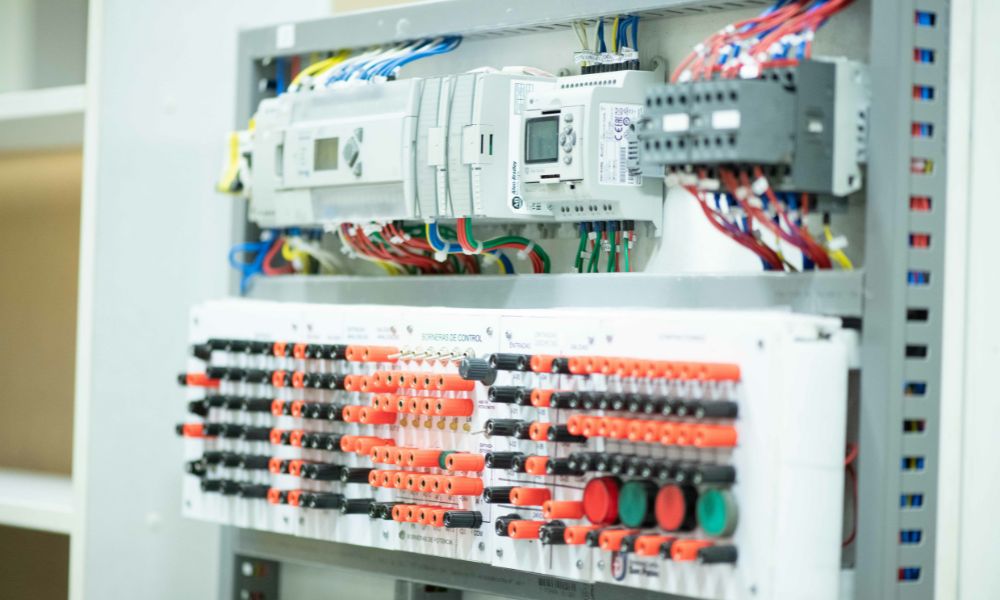
The food and beverage industry has seen tremendous advancements in recent years, driven by the need for increased efficiency, product quality, and compliance with stringent safety standards.
Among the key technologies spearheading this transformation are industrial PLCs and their integrated automation ecosystems. These sophisticated devices work alongside sensors, HMIs, motor drives, safety control PLCs, and process monitoring equipment to automate and control complex processes, ensuring production lines operate seamlessly and efficiently.
PLC integration in food packaging and processing enables precise control over critical processes such as
- Temperature
- Timing
- Material flow
This helps manufacturers maintain consistent quality while meeting strict hygiene and regulatory requirements.
This comprehensive guide explores how PLCs and supporting automation components are used in the food industry, their benefits, and why PLC upgrades for food systems can transform modern food and beverage manufacturing operations.
The Industry Benefits of PLCs
PLCs offer numerous advantages in terms of control and automation for food and beverage production, directly contributing to increased efficiency and higher-quality products. Firstly, PLCs enable greater consistency in production cycles by automating repetitive tasks, ensuring that high standards are consistently maintained across all batches of products. This not only speeds up production but also helps improve the shelf life and stability of the final items.
Moreover, PLCs facilitate the monitoring of significant KPIs and critical processes, such as:
- Temperature
- Pressure
- pH levels
- Flow rates
It allows for quick identification and rectification of any discrepancies. This level of control helps minimize wastage and reduce downtime during production runs.
Additionally, the flexibility of PLCs means they can be readily adapted to any requirement and easily expanded to accommodate increasing production volumes. This scalability ensures your business can grow seamlessly in line with increasing demands without the need for substantial alterations to your existing systems.
When combined with rugged sensors, industrial-grade HMIs, and reliable I/O modules designed for washdown environments, PLCs form the backbone of food production automation systems that can withstand harsh conditions while maintaining precise control.
An industrial PLC operates reliably in demanding food production environments, offering the following across both small and high-volume operations:
- Durability
- Real-time control
- Long-term scalability
Choosing the Right PLC for Your Food Industry Needs
When selecting a PLC for your food production line, it’s important to consider the specific requirements of your processes and operations. Here are a few types of PLCs commonly used in the industry.
|
Type of PLC |
When To Consider Them |
|
Compact PLCs |
Compact PLCs are ideal for smaller applications or remote installations. They are space-saving and suitable for temperature control or conveyor speed regulation. |
|
Modular PLCs |
Designed for more complex systems, modular PLCs offer greater versatility and expandability. They are perfect for larger operations where additional I/O modules may be required as production needs evolve. |
|
High-Performance PLCs |
High-performance PLCs are the best choice for operations that require high-speed processing and advanced control. They are typically used in high-volume production environments where precision and speed are critical. |
A PLC upgrade for food systems is often necessary when production capacity increases, product lines change, or legacy controllers no longer meet modern safety and monitoring requirements.
How PLCs Are Used in the Food Industry
PLCs are used in various stages of food production, from processing to packaging. They have many applications, and understanding their role in each step can highlight their value to the industry.
Here are a few more specific examples.
Processing:
In the processing phase, PLCs control everything from ingredient mixing to cooking and cooling. For instance, in a dairy processing plant, PLCs can regulate the temperature and timing of pasteurization to ensure milk is safely processed.
Similarly, in beverage production facilities, PLC control beer equipment and other fermentation systems by managing temperature, pressure, and cleaning cycles to ensure consistent quality and flavor.
Packaging:
Packaging is another critical area where PLCs shine. They ensure that products are accurately filled, sealed, and labeled. In a bottling plant, for example, a PLC might control the speed of the conveyor belt, ensuring bottles are filled to the correct level and capped correctly. Effective PLC integration in food packaging helps synchronize conveyors, fillers, sensors, and labeling equipment. This reduces errors while maintaining consistent packaging quality.
PLC integration food packaging enables seamless coordination between:
- Conveyors
- Fillers
- Sensors
- Labeling systems
Industrial PLCs help manufacturers maintain accuracy, consistency, and efficiency across high-speed packaging lines.
Modern packaging lines rely on more than just the PLC controller itself. Vision systems detect defects, proximity sensors verify product positioning, servo drives control precise conveyor movements, and safety relays protect workers around high-speed equipment. This integrated approach ensures that every component of your packaging line works together seamlessly for optimal performance.
Sorting and Inspection:
PLCs are also used in sorting and inspection systems to detect and remove defective products before they reach consumers. For example, a PLC-controlled system in a fruit processing line might use vision sensors to identify and remove bruised or undersized fruits, ensuring only the best products make it to market.
How PLCs Work in Processing and Packaging
To fully appreciate the role of PLCs, it’s essential to understand how they work within the processing and packaging stages specifically.
Control Systems
PLCs act as the brains of the operation, receiving input data from sensors and devices on the production line and using this data to make real-time decisions. For example, if a sensor detects that the temperature in a cooking vat is too high, the PLC will automatically adjust the heating element to bring it back to the desired level.
Safety control PLCs are often incorporated into these systems to manage:
- Emergency stops
- Fault detection
- Machine guarding
This ensures safe operation in regulated food production environments.
Programming and Flexibility
PLCs are programmed to execute specific tasks based on the needs of the production process. This programming can be adjusted or expanded as production demands change, making PLCs incredibly flexible. This is particularly important in the food industry, where product lines and recipes change frequently.
Integration with Other Systems
Industrial automation in food production relies on multiple integrated systems working together. PLCs coordinate with Human-Machine Interfaces (HMIs) for operator control, SCADA systems for data monitoring, and critical components including distributed I/O modules, temperature controllers, flow meters, motor starters, and safety relays. This integrated approach creates scalable food production solutions that improve efficiency and product quality.
Key Operational Advantages of PLC Implementation
Beyond the foundational benefits of control and automation, PLCs deliver measurable operational advantages that directly impact profitability and production performance.
Scalability:
One of the key benefits of PLCs is their scalability. PLCs can be customized to different needs, from running a small artisanal food production operation to a large-scale industrial facility. Modular PLCs, for instance, allow for easy expansion, meaning you can add more I/O modules as your production grows without overhauling your existing systems.
Real-Time Monitoring:
PLCs provide real-time monitoring and control of critical processes. This capability allows operators to detect and address issues before they escalate, reduce downtime, and prevent potential losses. It also ensures that production runs smoothly, with minimal interruptions.
Cost Efficiency:
PLCs help lower operational costs by automating processes and reducing manual labor. They also contribute to energy savings by optimizing the use of machinery and reducing waste, which is increasingly important in an industry with tight margins.
Programming Your PLC
The most important thing to know about using a PLC in the food and beverage industry is how to program it for your needs. When introducing a PLC into your food and beverage operations, it’s crucial to program it effectively to achieve optimal results. Following a structured programming approach is highly recommended; this includes:
- Clearly defining the objectives
- Understanding specific industry requirements
- Selecting the appropriate language for programming
Using a rigorous testing and simulation process ensures maximum reliability for your system, which is especially crucial in a highly regulated sector like the food and beverage industry. By thoroughly scrutinizing the program's behavior during process simulations, you can accurately predict system performance, identify anomalies, and optimize the PLC code before implementing it on the production floor. This, in turn, helps minimize future downtime or costly modifications.
When Should You Upgrade Your Food Production Automation?
Knowing when to upgrade versus repair existing automation equipment is critical for maintaining production efficiency. Older PLC systems may struggle to meet modern food safety traceability requirements or lack connectivity for real-time monitoring.
Consider upgrading when:
- Your current system cannot support new safety or compliance requirements
- Integration with modern HMIs, sensors, or monitoring systems is limited
- Replacement parts are discontinued or have extended lead times
- Production capacity needs exceed your current system's capabilities
- Energy efficiency improvements could reduce operating costs
Repair may be sufficient when:
- The system meets current production and regulatory needs
- Issues are isolated to specific modules or components
- A full system upgrade is planned within 1-2 years
Consulting with an automation supplier about available upgrade paths, component compatibility, and total cost of ownership helps ensure you make the right decision for your operation.
Why Choose PLC-Direct for Your PLC Needs?
At PLC Direct, we offer a wide range of industrial PLCs and automation components from top brands like Siemens, Fanuc, Omron, Schneider Electric, and Phoenix Contact. Our technology is designed to determine the right balance between price and lead time, ensuring you get the best value for your investment. Whether you need PLCs, I/O modules, HMIs, safety control systems, sensors, or complete PLC integration for food packaging lines, we have the solutions you need to upgrade your current system or expand your production capabilities.
Visit our Why Choose Us page for more information on how we can help you optimize your food production operations.
