
 1 year warranty

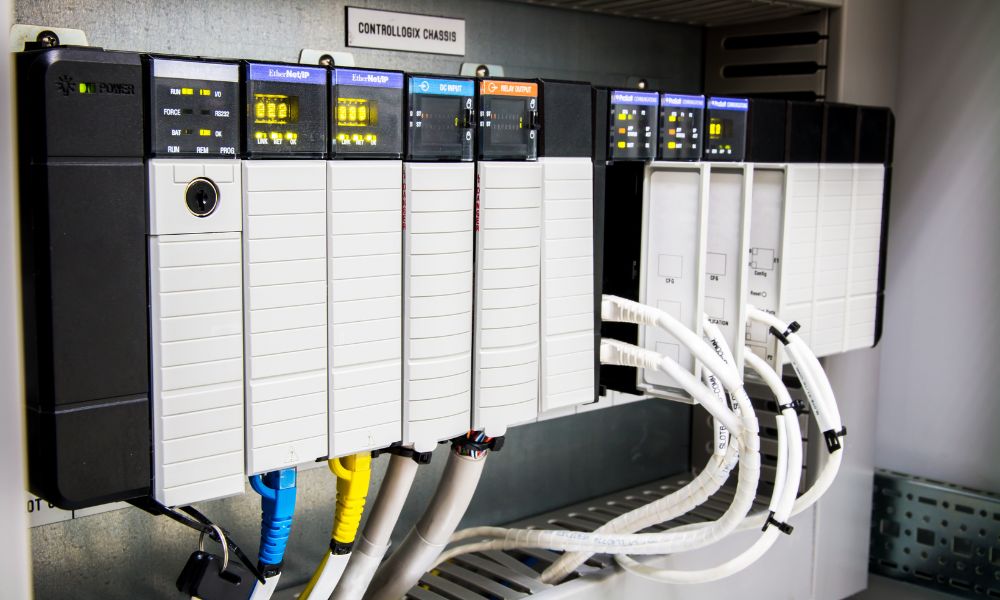
Automation is one of the most important innovations to consider when updating the performance of your equipment. However, only a few of the many devices on the market will help you accomplish exactly what you want. Programmable logic controllers, or PLCs, and microcontrollers are two popular models, but they're far from the same. Understanding the PLC vs microcontroller distinction will help you choose the right one for your application.
What Is a Programmable Logic Controller?
PLCs are specialized computer devices designed to automate industrial operations and the corresponding equipment. They commonly control machinery and processes on factory floors.
PLCs are programmable, which allows you to customize them to perform automation tasks with specified time, frequency, and power conditions. One of the key advantages of PLCs is their ability to handle complex control tasks, such as analyzing and responding to data from sensors and other equipment. By processing data received from your system, a PLC device can adjust operations to produce the greatest output.
What Is a Microcontroller?
Microcontrollers are small, low-cost processors that are part of a wide range of electronic devices. They’re common in consumer products like smartphones, smart home devices, and wearable technology.
Microcontrollers are highly customizable, making them ideal for automation in small applications. They’re also ideal for rapid prototyping due to their low cost and ease of programming.
What Is the Difference Between a PLC and a Microcontroller?
Now that you understand these two devices, it's time to discuss the core differences between PLCs and microcontrollers. While both are programmable, they are built for fundamentally different environments and use cases. The right choice depends on where the device will operate, what it needs to control, and who will be maintaining it.
Here's how the two compare across key evaluation criteria:
|
Criteria |
PLC |
Microcontroller |
|
Programming language |
Ladder Logic, Function Block Diagram, Structured Text |
C, C++ |
|
Environmental durability |
Rated for temperature extremes, vibration, electrical noise |
Not rated for harsh industrial conditions |
|
Typical application |
Industrial machinery, process control, factory automation |
Consumer electronics, embedded systems, prototyping |
|
Serviceability |
Documented part numbers, defined lifecycle support, sourced through industrial supply chain |
Often custom-built; field replacement is complex |
|
Cost |
Higher upfront cost |
Low unit cost |
Why Use a PLC Instead of a Microcontroller for Industrial Applications?
Choosing between PLCs and microcontrollers for automation solutions depends on several factors. If your automation includes complex control tasks, harsh environments, and specialized programming skills, PLCs are the way to go. Microcontrollers may be better if your automation tasks require rapid prototyping, low-cost processors, and customization in smaller applications.
For most industrial maintenance and procurement decisions, the operating environment alone makes PLCs the appropriate choice. Factory floors, process lines, and conveyor systems are subject to electrical noise, mechanical stress, and temperature extremes that microcontrollers are not rated to withstand.
Where to Source Replacement PLCs and Industrial Control Hardware?
For facilities maintaining existing PLC-based systems, sourcing replacement hardware quickly is often the more pressing concern. Unplanned downtime while waiting on OEM lead times is a real operational risk.
PLC Direct supplies surplus sealed, refurbished, and used PLCs and industrial automation hardware, including VFDs, HMIs, and I/O modules, from manufacturers including Omron, Mitsubishi Electric, and ABB, and more. All products carry a 1-year PLC Direct warranty. If you're sourcing a replacement PLC or supporting automation hardware for an installed system, contact PLC Direct to check availability.
