
 1 year warranty

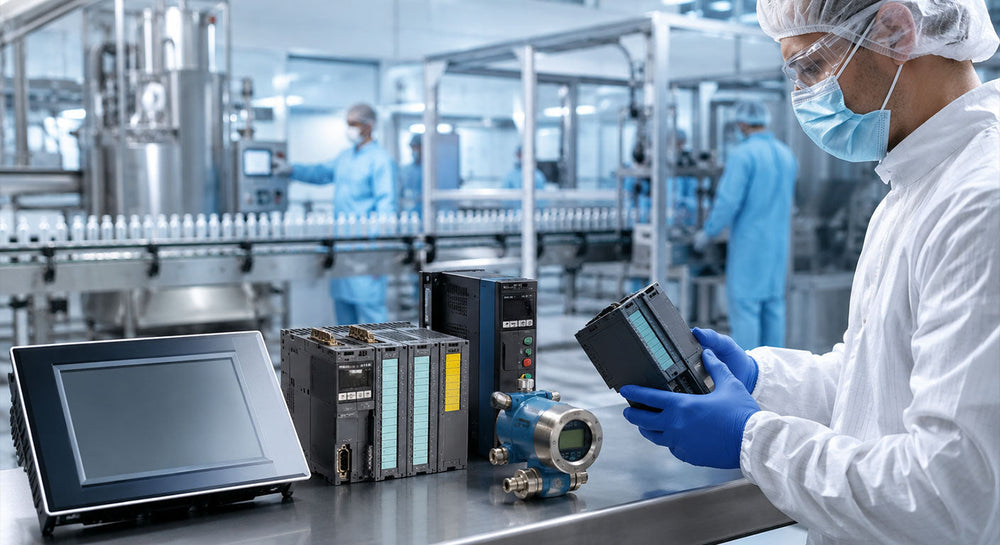
In pharmaceutical automation environments, automation hardware is part of a validated system. That means a hardware replacement is not just a procurement task. It can trigger a change control process, require qualification activities, and generate compliance documentation before a new component is cleared for use. The sourcing challenge is finding hardware that meets both the technical requirements and the on-site compliance pathway.
Independent suppliers stock surplus sealed, refurbished, and used automation hardware from the major platforms deployed in life sciences automation facilities. For procurement and validation teams sourcing replacement PLCs, HMIs, drives, or process instrumentation for an existing validated system, independent stock provides a practical alternative when OEM timelines are a constraint. PLC Direct supplies hardware for existing installations across a range of manufacturers and automation categories used in life sciences environments.
Why Is Hardware Sourcing More Complex in Pharmaceutical Manufacturing?
Pharmaceutical facilities classify automation hardware as part of a validated system rather than a generic utility asset. Replacing a component with a different part number, hardware revision, or firmware version can constitute a change to that validated system, which typically requires a formal assessment before the replacement goes in. For maintenance and procurement teams, sourcing decisions carry compliance implications in addition to the standard technical ones.
Three factors drive this complexity:
-
Change control requirements: A like-for-like replacement with the same part number and revision carries a minimal compliance burden. A functional equivalent from a different revision or source may require an impact assessment, updated documentation, or qualification testing before installation.
-
Documentation and traceability: Pharma facilities require full traceability on installed hardware. Sourcing outside OEM channels means procurement teams need evidence of hardware provenance, condition, and, where applicable, calibration status.
-
Audit readiness: Control system hardware is subject to inspection by regulatory authorities. Any component in a validated system must be supportable through audit, which adds weight to sourcing decisions that would be routine in other industries.
None of this prevents pharma facilities from sourcing outside OEM channels. It does require the sourcing process to account for the validation implications upfront.
What Automation Hardware Is Deployed in Pharmaceutical and Life Sciences Facilities?
Pharmaceutical automation environments rely on PLCs, HMIs, drives, I/O modules, and process instrumentation across drug manufacturing, filling, packaging, and quality control operations. Several major automation platforms have established installed bases across life sciences manufacturing, and their hardware is regularly available through independent suppliers.
Confirmed platforms and product families stocked by PLC Direct include:
-
Siemens: SIMATIC PLCs, including the S7-300 and S7-400 series, widely deployed in legacy pharma systems, alongside SIMATIC HMI panels for recipe management and operator control, SINAMICS drives for mixer and pump applications, and SITRANS process instrumentation for temperature and pressure measurement
-
Schneider Electric: Modicon M340 and M580 PACs for process and batch control, Magelis HMI panels, and Altivar drives for HVAC, pump, and utility system applications
-
Omron: Sysmac NX Series and CJ Series for machine control and packaging line automation
-
Mitsubishi Electric: MELSEC FX5 and Q Series for machine and process control, GOT Series HMIs for operator interfaces
Legacy hardware is a significant sourcing category in this industry. Validated systems are frequently maintained well beyond typical asset lifecycles, which means demand for Siemens S7-300, S7-400, and equivalent legacy components remains active long after OEM supply becomes restricted.
How Does Hardware Condition Apply in a Validated Environment?
The three hardware condition grades available through independent suppliers each carry different implications for qualification in a life sciences automation environment. Aligning on the right condition grade before ordering avoids qualification delays once the hardware arrives on-site.
Surplus sealed units are factory-sealed, original manufacturer stock. For a validated system, a surplus sealed unit with the exact matching part number and revision is the closest equivalent to a new OEM supply and typically carries the lowest qualification burden as a like-for-like replacement.
Refurbished units have been inspected, tested, and restored to operational condition. Documentation of the refurbishment process, what was tested, what was replaced, and what the unit was verified against is relevant for a pharma procurement team to request before ordering.
Used hardware requires the most thorough qualification approach and is best suited to non-critical or non-GMP-area applications with lower validation burdens.
All hardware purchased from PLC Direct carries a 1-year warranty regardless of condition grade. This warranty is issued by PLC Direct, an independent supplier, and is not an OEM or manufacturer warranty.
What Should Procurement and Quality Teams Verify Before Ordering?
In a validated environment, the quality or validation team should be involved in the hardware sourcing decision before the order is placed, not after the unit arrives. Getting the technical and compliance checks right up front avoids delays during installation and qualification.
Key verification steps:
-
Exact part number and revision: In validated systems, hardware revision can be as significant as the base part number. Confirm the full part number, including any revision suffix, before ordering.
-
Firmware version: For PLCs and HMIs with embedded firmware, confirm whether the firmware version on the replacement unit matches the validated configuration. Version mismatches may require a software impact assessment.
-
Calibration documentation: For process instrumentation in GMP applications, calibration records from the refurbishment process may be required before a unit can be installed and qualified.
-
Certifications: Confirm applicable certifications, ATEX for hazardous-area installations, and sanitary approvals for process-contact instrumentation, are present on the specific part number being ordered.
-
Change control pre-assessment: Confirm with the site quality team whether the sourced unit qualifies as a like-for-like replacement under the site's change control procedure before purchase, not after delivery.
Conclusion
For pharmaceutical and life sciences automation facilities that manage validated control systems, independent sourcing is a practical option for hardware when OEM channels are slow or a legacy component is no longer in standard production. PLC Direct supplies surplus sealed, refurbished, and used automation hardware, including PLCs, HMIs, drives, and process instrumentation from the major platforms deployed in life sciences environments. Contact PLC Direct with a part number to check availability and request a quote.
