
 1 year warranty

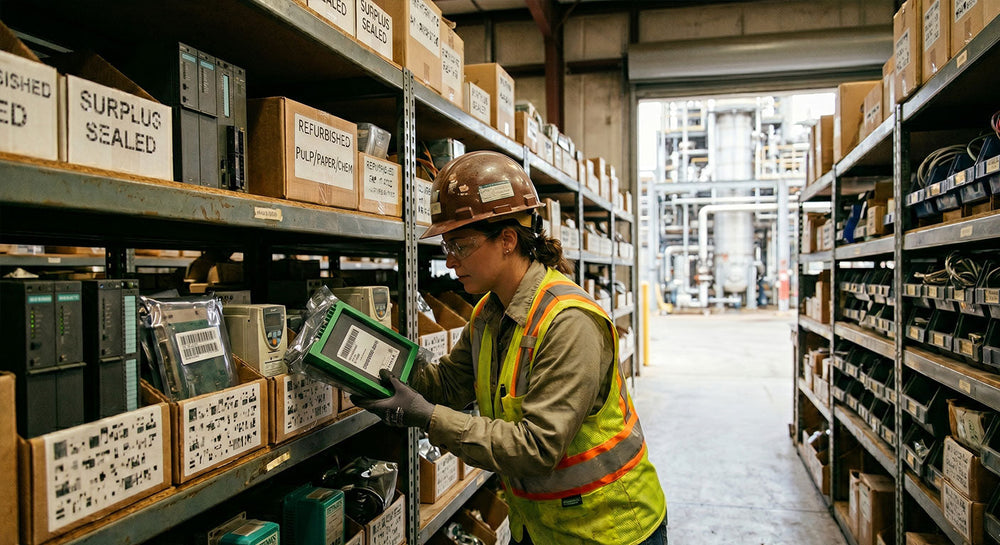
Pulp mills, paper machines, and chemical processing plants operate continuously, and unplanned shutdowns trigger batch losses, equipment damage, and days of recovery. The distributed control systems managing these processes were often installed 15 to 25 years ago and remain in service long past their manufacturer's active support window.
When a controller card, I/O module, or power supply fails on one of these platforms, a replacement through standard OEM channels is rarely available quickly. Sourcing surplus DCS hardware for a chemical plant or refurbished process control hardware for a pulp mill means working with a supplier that holds inventory outside the standard distribution network.
Why Do Pulp, Paper, and Chemical Facilities Depend on DCS Rather Than Standard PLCs?
DCS platforms handle the scale and complexity of continuous-process environments in ways that standalone PLCs cannot. They distribute control across multiple controllers, support high counts of analog I/O channels, and provide process variable management and redundancy that large facilities require. Schneider Electric's Modicon Quantum and M580 platforms, ABB's System 800xA and Freelance DCS, and Siemens SIMATIC S7-400 controllers are all widely deployed in these industries for this reason. Because migrating off an installed DCS platform requires a major capital project and a planned shutdown, most facilities keep existing hardware running and source replacement components as needed.
What Hardware Fails Most Often in Pulp and Paper Automation Systems?
Power supplies, I/O modules, drive components, and instrumentation transmitters are the categories most subject to wear in pulp and paper environments. Paper machines run with significant vibration and moisture exposure. Chemical recovery boilers operate under sustained high temperatures. VFDs on refiners, stock pumps, and fan systems run heavy-duty cycles. Sourcing refurbished process control hardware across these categories is standard maintenance practice because component-level replacement is almost always faster and more practical than platform replacement.
Which Controller Platforms Are Most Common in These Industries?
Schneider Electric Modicon Quantum and M580 are widely deployed in chemical and pulp facilities that standardized on those architectures. ABB System 800xA and Freelance DCS serve ABB-installed environments. Siemens SIMATIC S7-300 and S7-400 are common in Siemens-based plants, and both are legacy platforms well past active production, making refurbished process control hardware in these families a core sourcing need for facilities that cannot replace them without a full capital upgrade.
Which VFDs Are Used for Pumps, Fans, and Agitators in Process Industries?
Variable frequency drives control stock pumps, process fans, agitators, conveyor drives, and cooling and ventilation systems throughout pulp, paper, and chemical processing. Schneider Electric's Altivar 61 and Altivar 71 are widely deployed for pump and fan duty in these industries. ABB's ACS355 series handles motor control in demanding process environments. Siemens SINAMICS drives cover pump and compressor applications across these sectors. When a drive fails in a critical circuit, facilities with spare drives of the right rating avoid the production loss that comes with waiting for an OEM order.
What Process Instrumentation Hardware Gets Replaced Most Frequently?
Sensors and transmitters are among the first components to degrade in harsh chemical or high-humidity environments. Siemens SITRANS instrumentation, including pressure transmitters, temperature sensors, and flow measurement devices, is deployed extensively across pulp, paper, and chemical facilities. Surplus sealed and refurbished SITRANS instrumentation in verified functional condition is a practical sourcing path for maintenance teams managing aging field instrument populations with limited budget for new OEM hardware.
How Are I/O Modules Sourced for Legacy DCS Systems?
When individual I/O cards fail, they are almost always replaced in kind rather than triggering a platform change. In Siemens SIMATIC installations, ET 200SP distributed I/O modules handle field-level signal acquisition. Schneider Electric Modicon installations use dedicated I/O racks across the Quantum and M580 platforms. ABB's S500 I/O modules are compatible with the AC500 control platform. Sourcing these modules as pulp paper automation parts from an independent supplier is often the fastest available path when OEM lead times run to weeks or months.
Why Are Control System Power Supplies a Critical Sourcing Risk?
A failed power supply immediately takes an entire DCS cabinet offline. Siemens SITOP power supplies are standard for 24 VDC panel power in SIMATIC installations, and specific models can carry significant OEM lead times. Surplus sealed SITOP stock held by an independent supplier provides an availability option for facilities that need a rapid replacement in the event of a critical failure.
What Should Procurement Teams Verify Before Ordering Refurbished Process Control Hardware?
Verify the full part number, including hardware revision, confirm the condition grade, and request warranty documentation before placing an order. For DCS components, confirm that the hardware revision is compatible with the software version running on the installed system, since revision mismatches can require firmware updates or cause communication issues. Surplus sealed hardware is factory-sealed stock that has not been installed. Refurbished hardware has been tested and restored to operational condition. Both carry a 1-year PLC Direct warranty.
Conclusion
Pulp, paper, and chemical facilities running ABB, Schneider Electric, and Siemens automation infrastructure often find that OEM channels cannot meet the lead time or availability requirements for legacy and discontinued hardware. PLC Direct carries surplus sealed and refurbished hardware for these platforms, including PLCs, drives, instrumentation, I/O, and power supplies. Looking for surplus sealed or refurbished automation hardware for a pulp, paper, or chemical processing facility? Contact us to check availability and request a quote.
