
 1 year warranty

When a critical component fails, and the OEM quotes six to ten weeks on a replacement, procurement teams start looking outside standard distribution channels. For legacy and end-of-life platforms, especially, the authorized channel may not have any stock.
Surplus sealed industrial automation parts fill that gap. They sit outside the standard OEM supply chain and can often be sourced significantly faster and at lower cost for hardware that is no longer in current production. But surplus sealed is a specific condition designation, not a generic term for secondhand equipment, and understanding what it means is important before placing an order for a time-sensitive application.
What Does "Surplus Sealed" Mean in Industrial Automation?
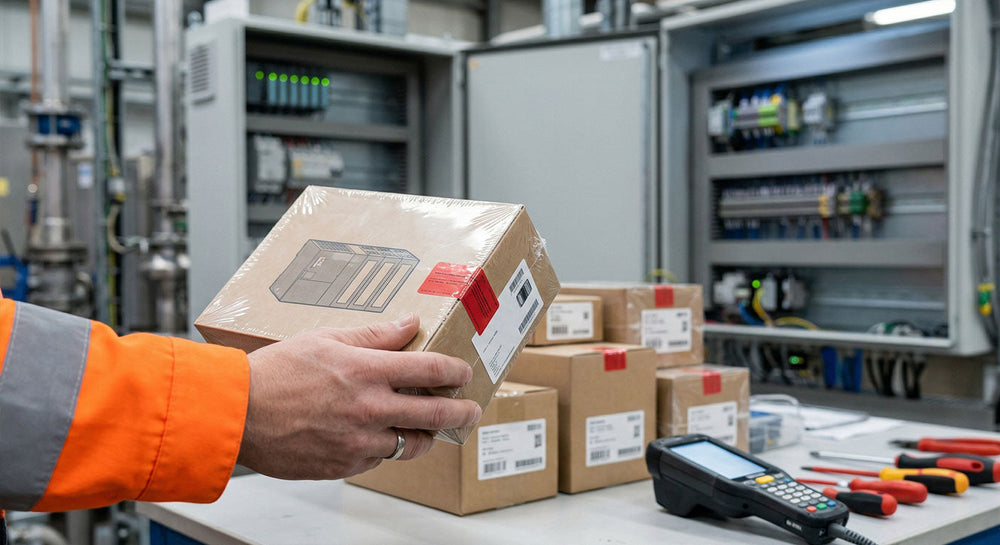
Surplus sealed refers to hardware that left the factory in its original packaging and has never been installed or operated. The unit was produced, packaged, and entered a surplus channel rather than a standard distribution path, typically through manufacturer overstock, canceled orders, discontinued product lines, or equipment liquidation.
At the point of sale, a surplus sealed unit:
- Has never been installed, powered on, or operated
- Retains its original factory packaging and seal
- Has not been modified, repaired, or refurbished in any way
One point worth stating directly: surplus sealed does not mean recently manufactured. A sealed surplus PLC may have been produced several years ago and stored since then. For most solid-state industrial automation hardware stored in normal conditions, that has no meaningful impact on performance. For components with date-sensitive elements, such as battery-backed memory modules or large electrolytic capacitors, it is worth confirming storage history where possible before installation.
How Is Surplus Sealed Different from Refurbished and Used Hardware?
These three condition grades reflect genuinely different hardware histories, and treating them as interchangeable leads to poor sourcing decisions.
Surplus sealed hardware has never been in service. It is the closest a non-OEM-sourced component gets to new, with the caveat that it may not be in current production.
Refurbished hardware has been in service, returned, and then inspected, tested, repaired where necessary, and restored to operational specification. A properly refurbished unit meets the original manufacturer's specifications. Its internal components will reflect prior use, but a reputable supplier documents the refurbishment process and backs the unit with a warranty.
Used hardware has been in service and is sold as-is or with limited testing. It is typically the lowest-cost option and suits non-critical applications, spare parts pools, or situations where incoming inspection is feasible before deployment.
The condition grade should match the application. For a safety-critical loop or a primary production PLC, surplus sealed or properly refurbished hardware with a warranty is the appropriate choice. For a non-critical auxiliary function where cost is the primary driver, used hardware may be acceptable.
Why Do Facilities Buy Surplus Sealed Industrial Automation Parts?
There are three practical reasons procurement teams and maintenance engineers turn to surplus sealed hardware.
Lead Time
OEM lead times for current-production hardware can run weeks or months. For legacy and end-of-life platforms, OEM supply may not exist. Surplus sealed parts sit outside the standard distribution chain and can often be sourced and shipped considerably faster.
Cost
Surplus sealed hardware is typically priced below the current OEM list. For facilities managing tight maintenance budgets or building out a spare parts pool across multiple units, the difference is significant.
Lifecycle Continuity
Many installed automation systems run on platforms that the manufacturer has discontinued. The Siemens SIMATIC S7-300, Schneider Electric Modicon Quantum, and numerous legacy drive and HMI platforms remain in active operation at facilities worldwide, years past their commercial end-of-life. Sourcing a sealed surplus PLC or module from one of these platforms allows a facility to maintain its installed system without forcing a premature migration that requires revalidation, re-engineering, and capital investment.
Which Industries Rely Most on Surplus Sealed Automation Hardware?
Any industry with long equipment lifecycles, an aging installed base, or constrained capital budgets has routine use for surplus sealed industrial automation parts. The heaviest reliance tends to be in:
- Process industries: Oil and gas, chemical, and petrochemical plants run automation systems with lifecycles of 20 to 30 years. The hardware installed during original commissioning is often long out of OEM production.
- Utilities: Water and wastewater treatment facilities operate under public budget constraints with aging control infrastructure. Replacement cycles are long, and spare parts availability is essential to maintain uptime.
- Mining: Remote locations, harsh environments, and continuous operation make unplanned downtime extremely costly. Keeping surplus sealed spares on hand is standard practice at well-managed mining operations.
- Food and beverage: Production lines tied to specific PLC platforms cannot always be taken offline for a full control system migration. Surplus sealed components extend the viable life of the installed platform.
- Discrete manufacturing: Automotive, metal fabrication, and plastics facilities that run legacy motion control and PLC hardware often rely on surplus sealed parts to keep production equipment operational between planned upgrade cycles.
What Should You Check Before Buying Surplus Sealed Automation Hardware?
Exact part number match. Industrial automation components are often revision-specific. A CPU from a slightly different hardware or firmware variant may not be a direct drop-in replacement. Confirm the full part number, not just the base model designation.
Warranty Coverage
A reputable independent supplier backs surplus sealed hardware with a warranty covering defects and functionality. PLC Direct provides a 1-year warranty on all hardware, including surplus sealed units.
Confirmed Stock
Some suppliers list parts they do not physically hold and source them after an order is placed. For time-sensitive applications, confirm that the specific part number is physically in inventory before ordering.
Clear Condition Grading
A supplier that uses surplus sealed, refurbished, and used as distinct, defined condition grades is operating transparently. Vague language like "like new" or "tested and working" without defined grading is worth treating with caution.
Returns and Support Process
For critical applications, understanding how the supplier handles a unit that does not perform as expected before installation is worth confirming before the order is placed, not after.
What Surplus Sealed Hardware Does PLC Direct Carry?
PLC Direct supplies surplus sealed industrial automation parts across PLCs, VFDs, HMIs, servo drives, I/O modules, sensors, instrumentation, and power supplies. The collection spans more than 30 brands including Siemens, Schneider Electric, ABB, Yaskawa, and more, with particular depth in legacy and end-of-life platforms where OEM sourcing is no longer a practical option.
All hardware, including surplus sealed units, carries a 1-year PLC Direct warranty covering defects and functionality. PLC Direct is an independent supplier and does not represent manufacturer authorization or OEM distribution relationships. If you are sourcing surplus sealed industrial automation parts for an installed system, contact us to check availability on specific part numbers across PLCs, drives, I/O modules, HMIs, and instrumentation.
