
 1 year warranty

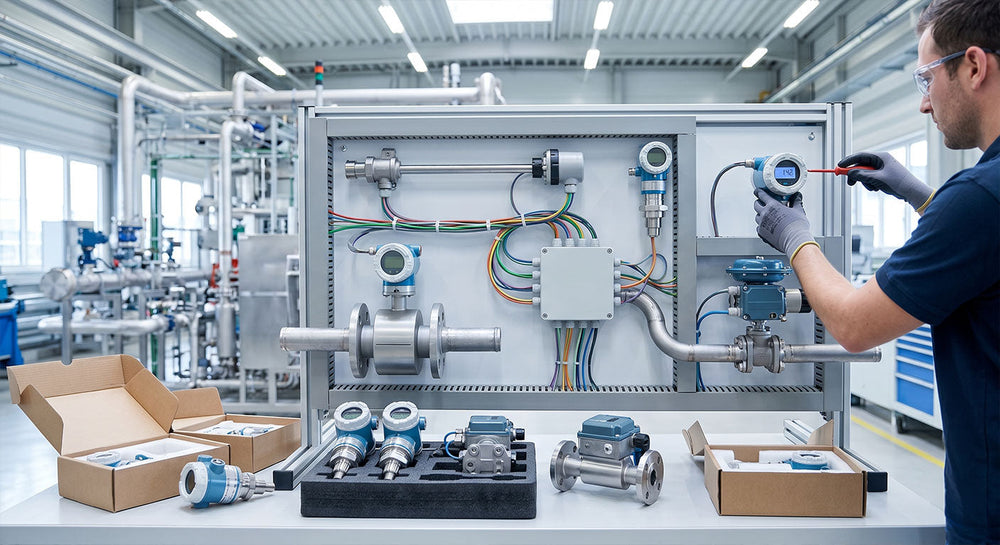
Process control doesn't stop at the PLC. The quality of every control decision depends on what the instrumentation upstream is reporting. Sensors, transmitters, and positioners translate physical process conditions into signals that automation systems can act on, and when that hardware fails or becomes difficult to source, the consequences move quickly through the production line.
For maintenance engineers managing installed instrumentation in aging facilities, sourcing challenges are often more difficult than the technical ones. OEM lead times for process instrumentation, particularly for established platforms with large installed bases, can extend from weeks to months. Surplus process instrumentation offers a practical alternative: hardware that works within existing system architectures without the wait or the capital commitment of new equipment.
What Role Does Industrial Instrumentation Play in Process Control?
Industrial instrumentation is the measurement and signal layer between physical process conditions and the control system. A PLC or DCS can only respond to what it receives from the field, and the accuracy of that data determines whether control loops run efficiently or drift into unsafe or wasteful operating ranges.
The core categories of process instrumentation include:
-
Sensors: Devices that detect a physical variable (temperature, pressure, flow, level, position) and convert it to an electrical or digital signal.
-
Transmitters: Signal-conditioning devices that amplify, convert, or relay sensor output to the control system over standard protocols (4–20 mA, HART, PROFIBUS, fieldbus).
-
Positioners: Devices that control the position of a final control element, typically a valve actuator, based on a control signal from the DCS or PLC.
-
Flow meters, level sensors, and pressure transducers: Application-specific instruments covering the most common process measurement variables.
In most industrial facilities, instrumentation is not replaced on a scheduled cycle. Equipment runs until it fails or until performance degrades past tolerance. That means the installed base in any given plant spans multiple generations of hardware, and sourcing replacement parts means navigating that mixed environment.
Why Is Sourcing Replacement Process Instrumentation Difficult?
The instrumentation supply chain presents specific challenges that differ from general automation hardware sourcing.
Process instruments are often calibrated to a specific range, protocol, or output signal at the time of installation. Replacing a failed transmitter isn't just about finding the right model number. It requires confirming that the output range, signal protocol, and process connection match the installed configuration. That level of specificity narrows the pool of compatible replacements and eliminates generic substitution.
For older installations, the problem compounds. Instrumentation platforms that were standard ten or fifteen years ago may no longer be in active production, or may be available only through long OEM order cycles. A maintenance team managing a pressure transmitter or flow meter on a legacy system doesn't have the option of waiting six weeks for a factory order when a conveyor, a pump circuit, or a batch process line is offline.
Surplus process instrumentation addresses this by making field-tested, compatible hardware available outside standard distribution timelines. Surplus sealed units are factory-sealed stock from the original manufacturer; refurbished industrial sensors and transmitters have been tested and restored to operational condition. Either condition grade provides a working replacement that matches the installed specification without requiring system redesign.
Which Siemens SITRANS hardware is used in Process Instrumentation?
The Siemens SITRANS product family covers a broad range of process measurement instrumentation for industrial environments. SITRANS instruments are deployed across process industries, including oil and gas, chemical, water and wastewater, food and beverage, and heavy manufacturing, where measurement accuracy and hardware durability under process conditions are non-negotiable.
SITRANS instrumentation includes transmitters, sensors, and measurement devices for flow, level, pressure, and temperature. In facilities where SITRANS hardware is already installed, replacement and lifecycle continuity typically means sourcing compatible hardware that matches the original specification rather than re-engineering the instrumentation loop.
SIPART positioners are another component of the Siemens process instrumentation portfolio, used to control valve actuators in modulating control applications. In automated process control, a failed or drifting positioner directly affects loop performance. Tight control of flow, pressure, or level depends on the positioner responding accurately to the control signal it receives.
For facilities managing installed SITRANS or SIPART hardware with extended OEM lead times, independent sourcing is a practical option. PLC Direct supplies SITRANS replacement parts as an independent supplier, offering surplus sealed and refurbished hardware outside standard OEM channels. Sourcing SITRANS replacement parts through an independent supplier avoids the lead-time exposure that comes with direct OEM orders for equipment that may be approaching the end of active production.
What Other Brands Cover Industrial Instrumentation Needs?
Process instrumentation isn't limited to a single manufacturer, and most installed facilities run instrumentation from multiple vendors across different measurement loops. SITRANS is common in European-heritage process plants and integrated Siemens SIMATIC environments. Other instrumentation hardware in the PLC Direct inventory comes from the broader automation portfolio.
Omron's Sysmac and CJ Series platforms include I/O modules and signal-conditioning hardware for sensor integration and process data collection. Schneider Electric's portfolio includes power metering and measurement hardware under the PowerLogic line, used in facilities to monitor energy consumption alongside process variables. ABB's industrial automation platform, including the System 800xA and associated I/O hardware, handles instrumentation integration in distributed control environments.
For maintenance teams sourcing replacement parts across a mixed-brand instrumentation environment, the relevant question is whether available hardware matches the installed specification: output signal, communication protocol, process connection, and environmental rating. PLC Direct's inventory spans multiple brands and product families, enabling sourcing across the diverse instrumentation environments most industrial facilities operate.
What Should Maintenance Engineers Know Before Sourcing Surplus Instrumentation?
Sourcing surplus process instrumentation requires a few checks that differ from sourcing standard automation components.
-
Output range and signal type: Process transmitters are typically configured for a specific measurement range and output signal (4–20 mA, HART, PROFIBUS PA, Foundation Fieldbus). A replacement must match the installed output type; a HART transmitter cannot directly substitute for a PROFIBUS PA device without additional configuration.
-
Process connection and wetted materials: For pressure and flow instruments, the process connection type and wetted material specification must match the installed hardware. These parameters are determined by the process fluid and operating conditions, not by preference.
-
Condition grade: Surplus sealed hardware is factory-sealed and retains original calibration documentation where available. Refurbished instruments have been tested and restored to operational condition. Used hardware is available where sealed or refurbished stock is not, and may require calibration verification before installation.
-
Part number specificity: Process instrumentation part numbers encode configuration data. A full part number, including output range and process connection suffix, is the most reliable basis for sourcing a compatible replacement.
Source Reliable Instrumentation Hardware Without the OEM Wait
Process instrumentation is too often an afterthought in automation sourcing strategies, until a transmitter fails or a positioner drifts, leaving a control loop open. For facilities managing installed SITRANS hardware, mixed-brand instrumentation environments, or legacy systems with limited OEM availability, surplus sealed and refurbished options provide a direct path to hardware that fits the installed specification.
PLC Direct is a SITRANS replacement parts independent supplier. We also provide broader process instrumentation hardware across multiple industrial automation brands. All hardware carries a 1-year PLC Direct warranty across surplus sealed, refurbished, and used condition grades. To check availability on specific part numbers or discuss your instrumentation sourcing requirements, contact PLC Direct.
